Ecological Community Simulator
Community Analysis
Trophic Structure
- No data yet.
Current Biocoenosis Members
Your ecological community is empty. Add species above to begin.
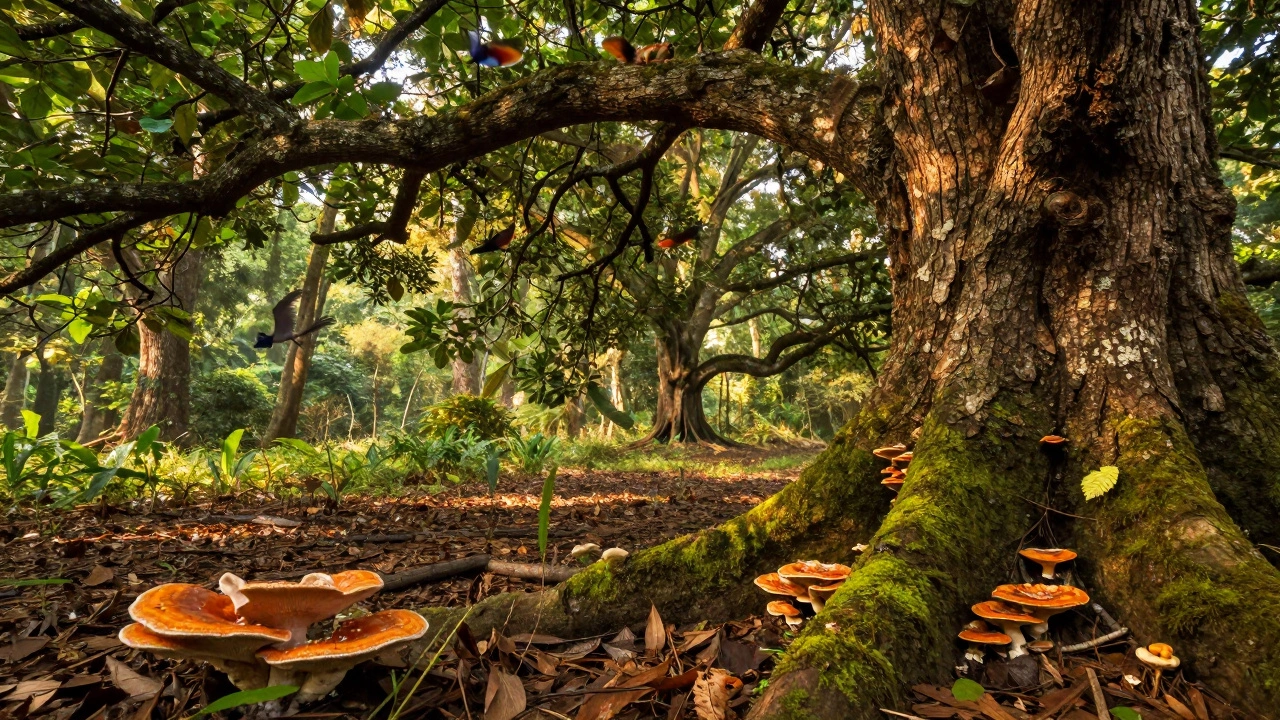
You walk through a forest. You see oak trees, squirrels, fungi, and birds. It looks like a random collection of living things, but it isn't. In ecology, this specific group of interacting organisms living in the same area has a precise name. Knowing that name helps you understand how nature actually works.
The term you are looking for is an ecological community. Scientists also use the technical term Biocoenosis, which comes from Greek roots meaning "living together." This concept is distinct from an ecosystem, though people often mix them up. An ecosystem includes the physical environment (soil, water, air), while a biocoenosis refers strictly to the biological component-the web of life itself.
The Definition of an Ecological Community
An ecological community consists of all the populations of different species that live close enough together to interact. The key word here is interaction. If two species live in the same forest but never touch, eat, or affect each other, they aren't really part of the same functional community unit.
To break it down further:
- Population: A group of individuals of the same species (e.g., all the red foxes in a park).
- Community: All the different populations in that area (foxes, rabbits, grass, insects).
- Ecosystem: The community plus the non-living factors (sunlight, temperature, soil chemistry).
Think of a coral reef. The fish, corals, algae, and crustaceans form the community. The water temperature, salinity, and sunlight form the abiotic environment. Together, they make the reef ecosystem. When you ask what an ecological community is called, you are asking about the living network, not the stage it performs on.
How Species Interact Within a Community
A community isn't just a crowd; it's a structured society with rules. These rules are defined by interactions between species. There are four main types of relationships that hold a biocoenosis together.
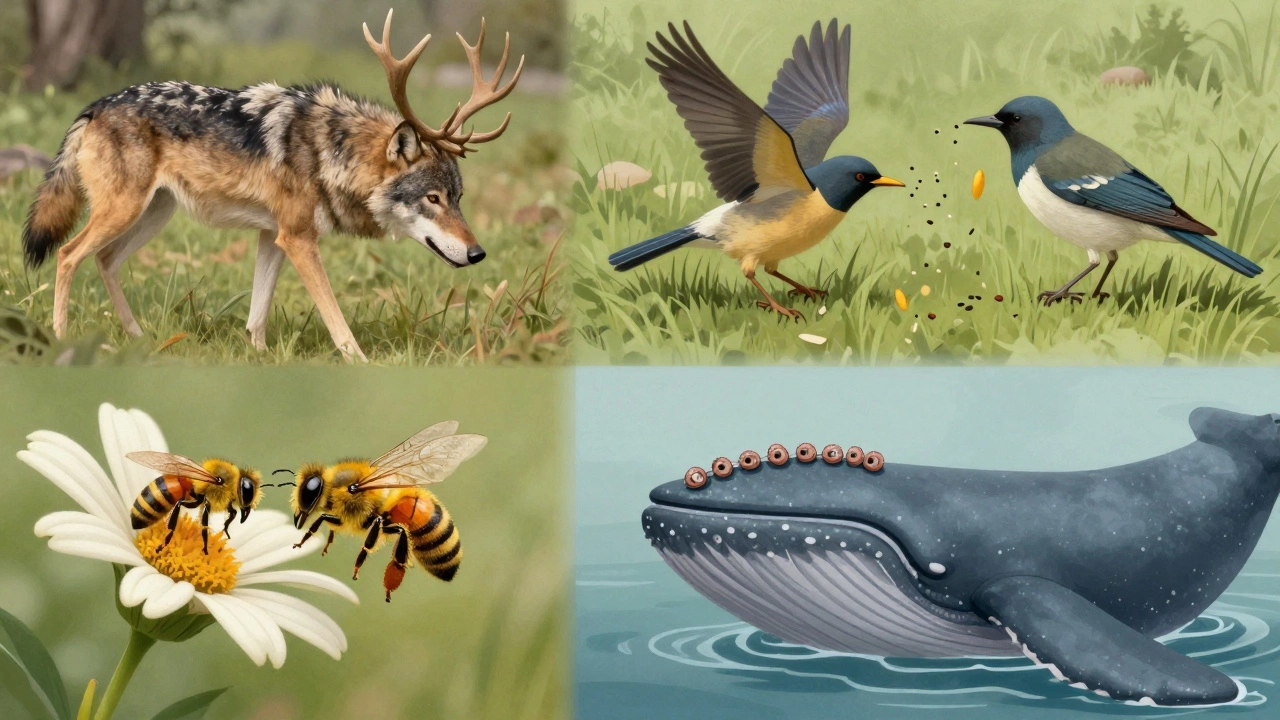
- Predation: One organism eats another. This keeps population sizes in check. For example, wolves eating deer prevents overgrazing.
- Competition: Two species fight for the same resource, like food or space. This drives evolution, forcing species to adapt or specialize.
- Mutualism: Both species benefit. Bees get nectar from flowers, and flowers get pollinated. Neither survives well without the other.
- Commensalism: One benefits, and the other is unaffected. Barnacles attach to whales for a free ride and access to food particles, while the whale doesn't care.
These interactions create a balance. If you remove one piece, the whole structure can shift. This is why understanding the community structure matters so much for conservation efforts.
Key Concepts: Niche vs. Habitat
When studying communities, you will hear two terms used constantly: habitat and niche. They sound similar, but they mean very different things.
| Concept | Definition | Analogy |
|---|---|---|
| Habitat | The physical place where an organism lives. | Your address. |
| Niche | The role an organism plays in the community (what it eats, when it sleeps, how it reproduces). | Your job description. |
In any healthy ecological community, no two species can occupy the exact same niche indefinitely. This is known as the Competitive Exclusion Principle. If two birds eat the exact same seeds at the exact same time of day, one will eventually outcompete the other. Over time, species evolve to fill slightly different roles-perhaps one eats larger seeds, or one feeds in the morning while the other feeds in the evening. This division of labor allows more species to coexist.
Succession: How Communities Change Over Time
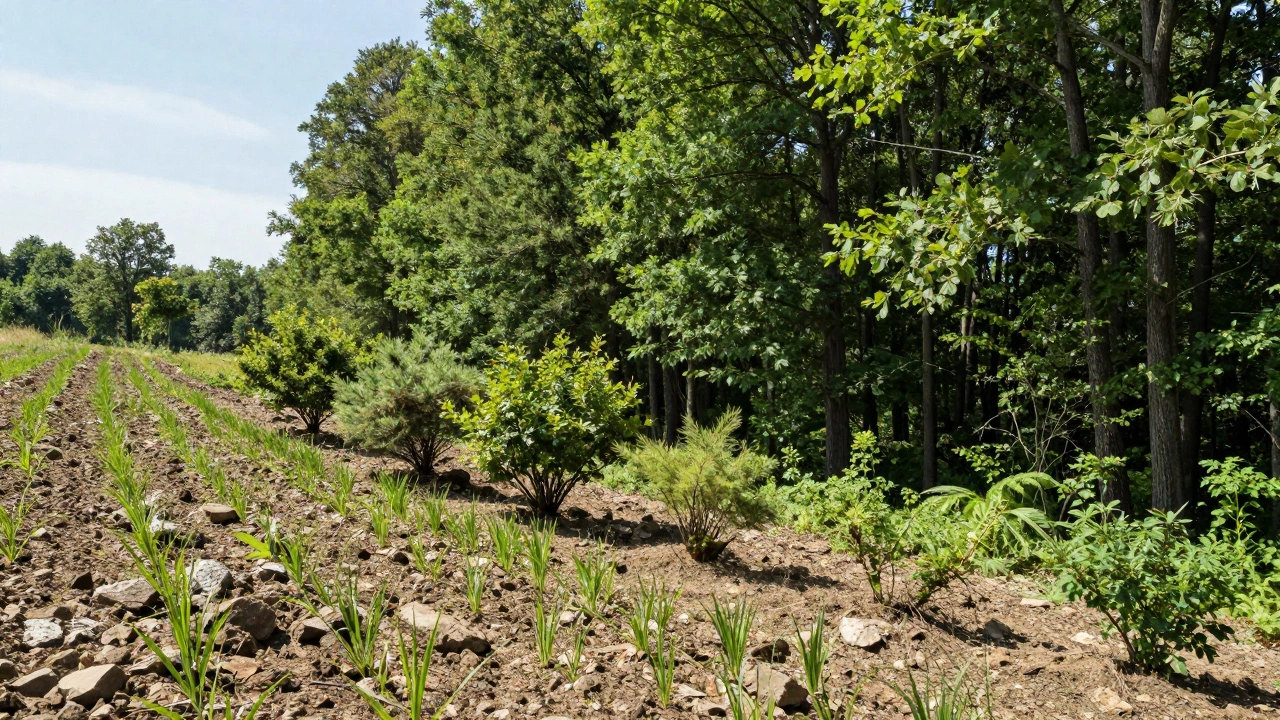
Ecological communities are not static. They change, sometimes slowly, sometimes rapidly. This process is called succession. Imagine a field abandoned after farming stops.
First, pioneer species arrive. These are hardy plants like weeds and grasses that can grow in poor soil. They stabilize the ground and add organic matter as they die. Next, shrubs and small trees move in. Finally, large trees dominate, creating a canopy that blocks sunlight. The community shifts from open grassland to dense forest. This final, stable state is called the climax community.
However, disturbances like fires, floods, or human activity can reset this clock. Secondary succession happens faster because the soil is already rich. Understanding these stages helps environmental groups plan restoration projects. You cannot plant oak trees in bare rock; you have to follow the natural order of community development.
Biodiversity and Community Stability
Biodiversity refers to the variety of life within a community. High biodiversity usually means a healthier, more resilient system. Why? Because if one species fails, others can step in to fill its role.
Consider a simple community with only one type of crop. If a pest attacks that crop, the whole community collapses. Now consider a rainforest with thousands of plant species. If a fungus kills one tree species, the rest survive, and the overall structure remains intact. This redundancy is crucial.
Scientists measure diversity using indices that count both the number of species (richness) and how evenly individuals are distributed among those species (evenness). A community with 100 trees of one species has low diversity. A community with 10 trees of ten different species has high diversity.
Human Impact on Ecological Communities
Humans are part of every terrestrial community we inhabit, but our impact is often disruptive. Urbanization fragments habitats, breaking large communities into isolated pockets. This isolation reduces gene flow and increases the risk of local extinction.
Invasive species pose another major threat. When humans introduce a non-native species-like cane toads in Australia or zebra mussels in North America-they often lack natural predators. They explode in population, outcompeting native species for resources and altering the entire community structure. Restoring balance requires removing the invader and reintroducing native species, a complex and expensive process.
Climate change adds another layer of complexity. As temperatures rise, species may migrate to higher latitudes or altitudes. But they don't all move at the same speed. A flower might bloom earlier due to warmer springs, but its pollinator insect might not emerge until later. This mismatch disrupts mutualistic relationships, weakening the community fabric.
Why This Matters for Environmental Groups
If you work with or support environmental groups, understanding the term "biocoenosis" or "ecological community" changes how you approach problems. You stop seeing individual animals in isolation and start seeing networks.
Conservation isn't just about saving a charismatic animal like a panda. It's about preserving the bamboo forests, the soil microbes, and the water systems that support the panda. It's about maintaining the interactions that keep the community stable. When you advocate for protected areas, you are advocating for the integrity of these living networks.
By recognizing that an ecological community is a dynamic, interconnected system, you can better appreciate the complexity of nature. You learn that every species, no matter how small, plays a role. And you understand that protecting biodiversity is not just a moral choice-it's a practical necessity for a functioning planet.
What is the difference between a community and an ecosystem?
A community (or biocoenosis) includes only the living organisms in an area. An ecosystem includes the living community plus the non-living physical environment, such as soil, water, and climate. Think of the community as the actors and the ecosystem as the stage and props combined.
What does the term 'biocoenosis' mean?
Biocoenosis is a scientific synonym for ecological community. It emphasizes the idea of living together. It refers to the interdependent group of plants, animals, and microorganisms inhabiting a specific area and interacting with each other.
Can an ecological community exist without humans?
Yes. Most ecological communities existed long before humans appeared. However, today, human influence is so widespread that truly untouched communities are rare. Even remote areas are affected by climate change and atmospheric pollution.
How do invasive species affect an ecological community?
Invasive species disrupt community balance by outcompeting native species for resources, predating on them, or introducing new diseases. Because they often lack natural predators in their new environment, their populations can grow unchecked, leading to the decline or extinction of native species.
What is a climax community?
A climax community is the final, stable stage of ecological succession. It is characterized by a diverse mix of species that remain relatively unchanged over time unless disturbed by a major event like a fire or volcanic eruption. Examples include mature tropical rainforests or temperate deciduous forests.