Texas Homelessness Impact Calculator
How SB 11 Affects Homelessness in Your City
This calculator shows the impact of Senate Bill 11 on homeless populations when shelter capacity is limited. Based on data from Texas Coalition to End Homelessness.
Results
Key Findings
According to Texas Coalition to End Homelessness data:
- 68% of citations under SB 11 go to people who had no access to shelter beds that night
- Over 40% of people fined are women or LGBTQ+ individuals
- Shelters are operating at 118% capacity in major Texas cities
- Less than 5% of unsheltered people access temporary housing programs
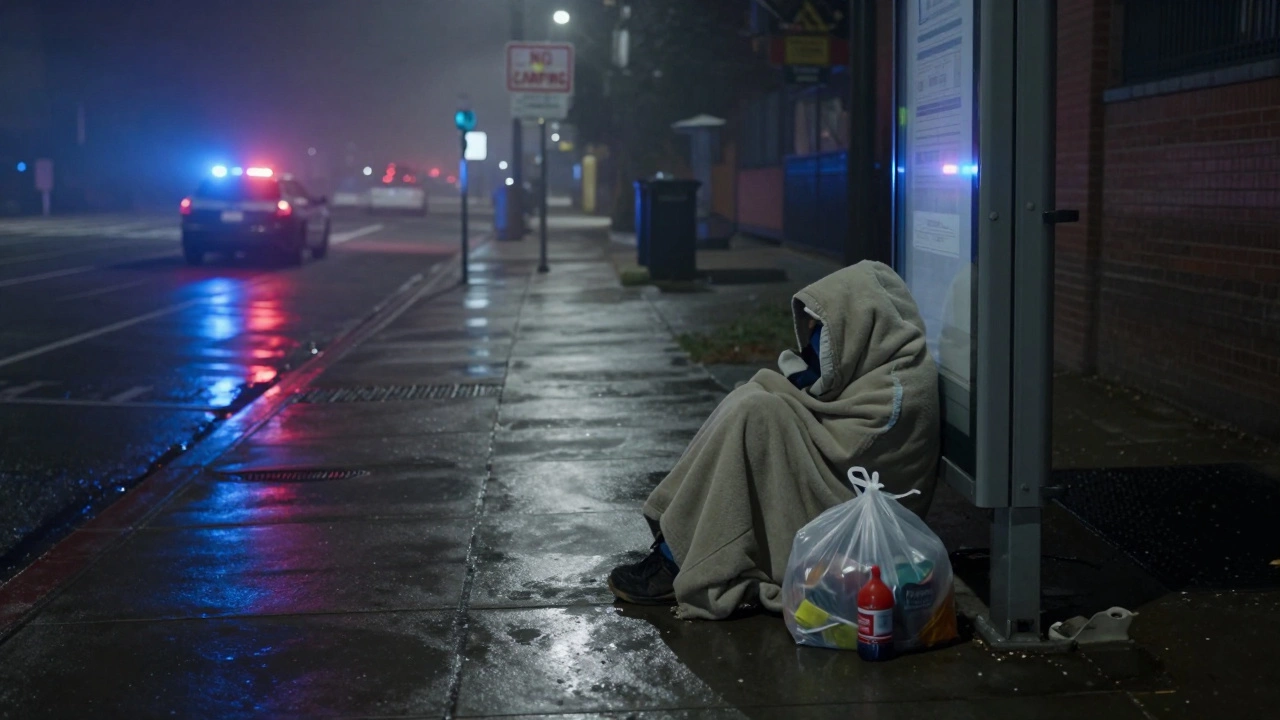
On January 1, 2026, a new law went into effect in Texas that changed how cities handle homelessness. It’s called Senate Bill 11, and it’s sparked intense debate across the state. If you’ve seen more police patrols near underpasses, or noticed shelters turning people away, this law is why. It doesn’t ban homelessness. But it makes it harder for people to sleep, sit, or even camp in public spaces - even when there’s no available shelter space.
What Does Senate Bill 11 Actually Say?
SB 11 doesn’t create new shelters or fund more housing. Instead, it gives cities the power to criminalize certain behaviors in public areas if those areas are designated as "no-camp zones." These zones can include parks, sidewalks, bus stops, and even the edges of rivers or bridges. The law says cities can issue citations for:
- Sleeping in public spaces
- Setting up tents or tarps
- Storing personal belongings in public
- Offering food or water to homeless individuals without a city permit
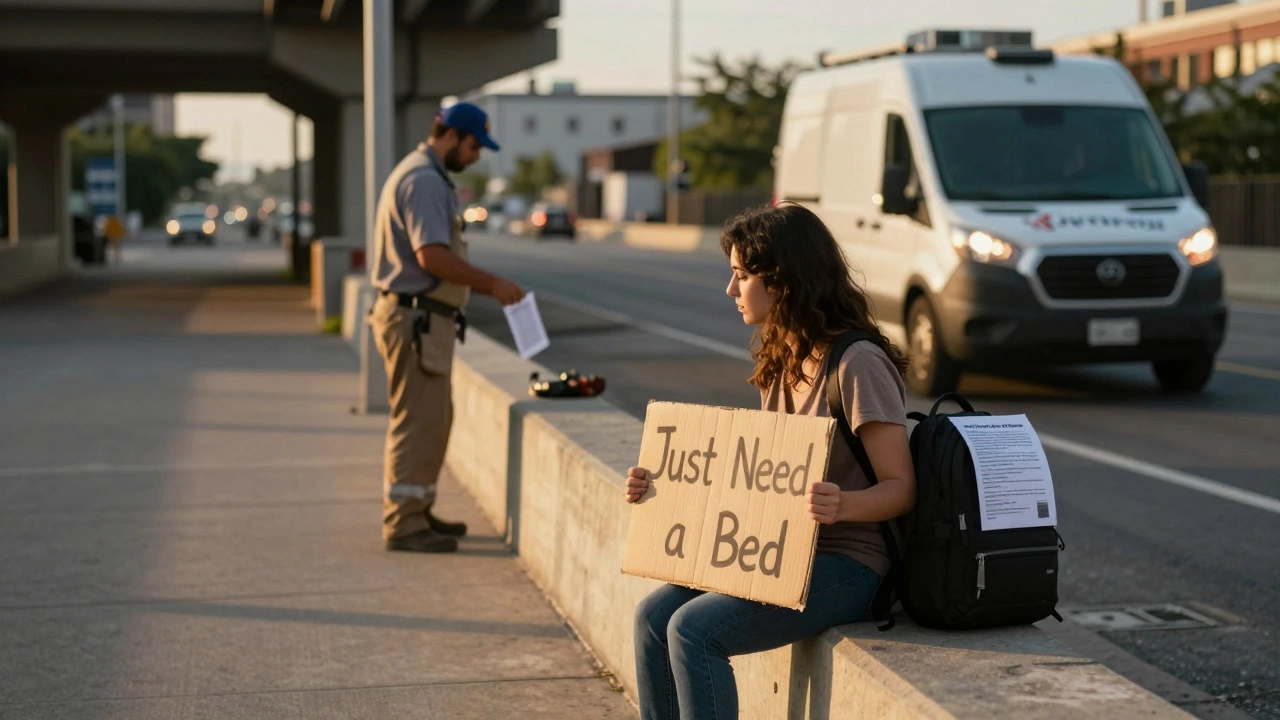
Here’s the catch: the law doesn’t require cities to prove there’s enough shelter space before enforcing these rules. That means a person can be ticketed for sleeping on a bench - even if the nearest shelter is full, 12 miles away, or has a 72-hour waitlist.
How Are Shelters Responding?
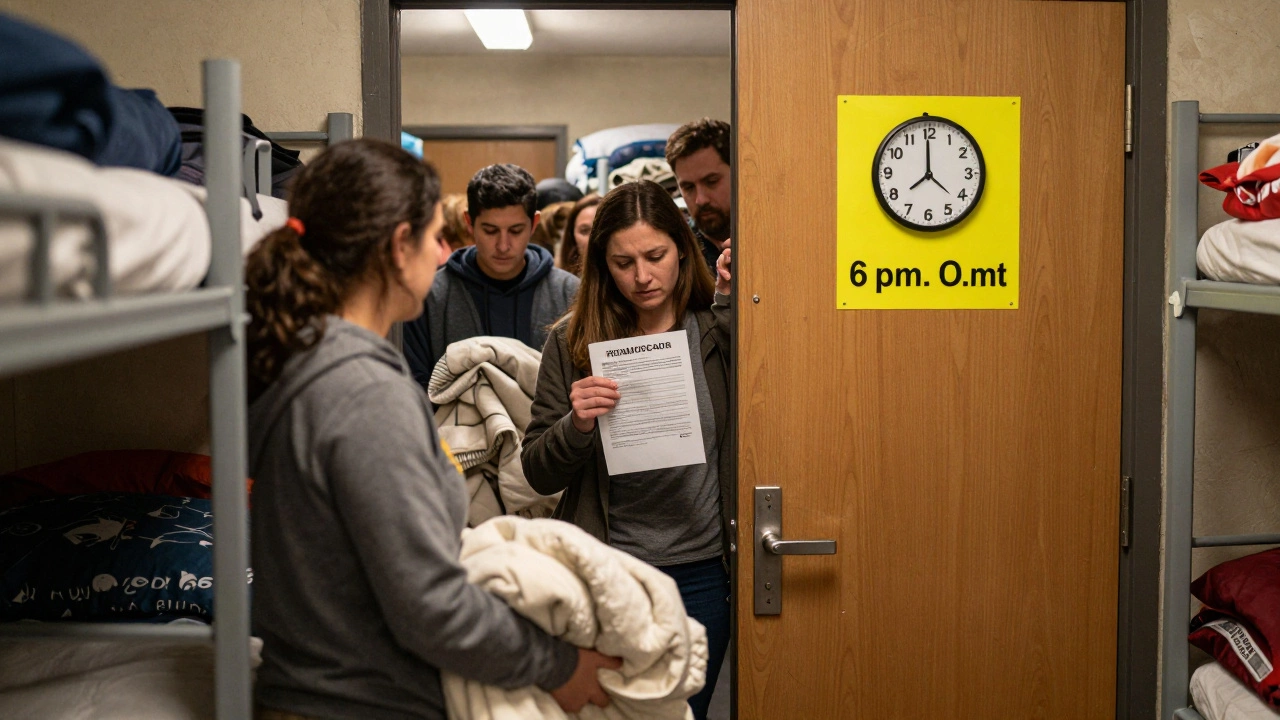
Homeless shelters across Texas are overwhelmed. According to the Texas Coalition to End Homelessness, shelter capacity is at 118% of its limit in Houston, Dallas, and Austin as of February 2026. Many shelters are now turning people away simply because they don’t have beds. Some shelters are even refusing to accept new clients after 6 p.m. to avoid violating city curfews tied to SB 11.
One shelter director in San Antonio told a local news crew: "We used to say, ‘Come in, you’re safe.’ Now we say, ‘We’re full. Go somewhere else.’ And if they go somewhere else, they risk getting fined."
Some shelters have started working with local governments to become "designated safe zones" - places where people can stay without fear of arrest. But to qualify, they must follow strict rules: no alcohol, no visitors after 9 p.m., mandatory drug screenings, and ID checks. For many, especially those fleeing abuse or dealing with mental health crises, these rules feel more like traps than help.
Who’s Being Impacted the Most?
The law doesn’t target just one group. But the data shows clear patterns. A March 2025 study by the University of Texas at Austin found that:
- 68% of citations under SB 11 went to people who had no access to shelter beds that night
- 52% of those cited were veterans or had documented mental health conditions
- Over 40% of people fined were women or LGBTQ+ individuals, who are far more likely to be turned away from gender-segregated shelters
One woman in El Paso, who asked not to be named, said she was cited twice in two weeks for sleeping under a highway overpass. She had been staying with a friend who lost their job and couldn’t pay rent. "I don’t have a criminal record," she said. "I just don’t have a home. And now I owe the city $200. How am I supposed to pay that when I can’t even get a job without an address?"
What About the "Solutions" Cities Are Offering?
Cities like Austin and Fort Worth have tried to spin SB 11 as a "move toward order." They point to new "mobile outreach teams" and "transitional housing pilots." But here’s the reality: these programs serve less than 5% of the unsheltered population.
The state allocated $120 million for homelessness in 2025 - but $87 million of that went to law enforcement training and court fees, not housing. Only $18 million went to permanent supportive housing. That’s about $300 per person without a home.
Meanwhile, the number of people living on the streets has grown by 22% since 2023. The Texas Health and Human Services Commission admits it doesn’t track how many people are being displaced by these laws. They say they "focus on shelter availability," not enforcement outcomes.
Is This Legal?
Legal experts say yes - for now. In 2024, the U.S. Supreme Court ruled in City of Grants Pass v. Johnson that cities can ban sleeping in public if they claim to offer "alternative shelter." That decision opened the door for SB 11. But the ruling didn’t require cities to actually provide enough shelter. It just said they could enforce the ban if they said they tried.
Human rights groups are suing. The ACLU of Texas filed a federal lawsuit in December 2025, arguing that SB 11 violates the Eighth Amendment by punishing people for being homeless. The case is still pending. Until then, the law stands.
What Can Be Done?
There’s no magic fix. But real progress has happened elsewhere. In Utah, a program called "Housing First" gave people homes - no strings attached - and cut chronic homelessness by 50% in five years. In Oregon, cities that allowed tiny home villages saw a 30% drop in emergency room visits from unsheltered people.
Texas could do the same. But instead of funding housing, the state is funding citations. That’s not a solution. It’s a cycle: ticket, fine, court date, arrest record, lost job, harder to get housing, back on the street.
What’s missing? Money. Compassion. Willpower. The law doesn’t fix the problem. It just moves it from one place to another - and makes life harder for the people already struggling the most.
What’s Next?
Local advocacy groups are pushing for a statewide moratorium on enforcement until shelter capacity reaches 100%. They’re also calling for an audit of how SB 11 funds are being spent. The Texas legislature reconvenes in January 2027. Until then, thousands will keep sleeping on sidewalks - and getting fined for it.
If you’re wondering how to help, don’t wait for a law to change. Volunteer at a shelter. Donate blankets, socks, or hygiene kits. Ask your city council: "Are we spending our money on housing - or on handcuffs?"
Is it illegal to sleep in your car in Texas under the new law?
Yes, in cities that have designated "no-camp zones," sleeping in a vehicle is treated the same as sleeping on the sidewalk. If the vehicle is parked in a public area - like a parking lot, street, or rest area - and the city has passed an ordinance under SB 11, you can be cited. Some cities allow overnight parking at designated lots, but these are often far from public transit and services.
Can you be arrested for giving food to homeless people in Texas?
In some cities, yes. SB 11 lets local governments require permits for public food distribution. Cities like Houston and San Antonio now require organizations to apply for permits, limit distribution to specific hours, and restrict food to pre-packaged items. Without a permit, handing out sandwiches or water in public can result in a misdemeanor citation. This has shut down many faith-based and grassroots food-sharing efforts.
Are shelters in Texas required to accept everyone who shows up?
No. There is no state law requiring shelters to take anyone. Many shelters operate on limited funding and space, and they often turn people away due to capacity, behavior rules, or gender restrictions. SB 11 has made this worse - because cities now pressure shelters to reduce "crowding" to avoid enforcement penalties, some shelters are turning people away even when they have space.
How many people are homeless in Texas right now?
The official 2025 point-in-time count estimated 27,800 people were homeless on any given night in Texas. But experts say that number is low - it doesn’t count people staying in cars, doubled up with friends, or living in abandoned buildings. When you include those groups, the real number is closer to 65,000. Only about 14,000 shelter beds are available statewide.
What’s the difference between SB 11 and previous homelessness laws in Texas?
Before SB 11, cities could ban camping in certain areas, but they had to prove they had enough shelter space. SB 11 removes that requirement. Now, cities can enforce bans regardless of availability. It also expands penalties - fines can now go up to $500 and include mandatory court appearances. Previous laws were mostly local ordinances. SB 11 is a statewide law that overrides local protections.