Volunteer Sector & Gender Profile Checker
Select a country below to view specific volunteering statistics, or click a sector card to see which gender typically dominates that field.
Explore Sector Preferences
Social Services
Care & SupportSports & Env.
Active RolesGovernance
LeadershipEmergency
ResponseInsight:
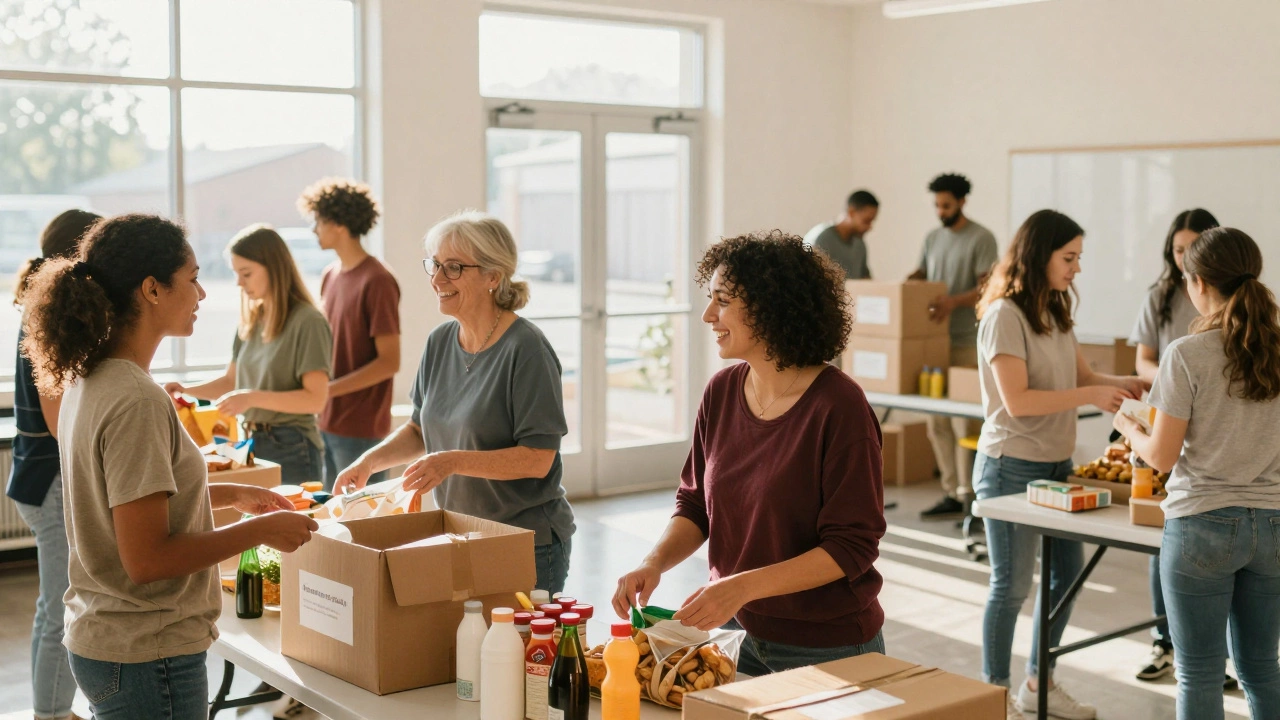
Walk into almost any community center, food bank, or animal shelter on a Saturday morning, and you’ll likely see more women than men. It’s a common sight that leads many to assume women are naturally more inclined to give their time away. But is that really true? The short answer is yes-women consistently volunteer at higher rates than men in most countries. However, the story isn’t just about who shows up; it’s about *where* they show up, *why* they do it, and how those patterns are shifting as society changes.
If you’re looking to recruit volunteers, understand nonprofit workforce dynamics, or simply curious about social behavior, understanding these gender gaps is crucial. This article breaks down the latest data on volunteering, explores the reasons behind the disparity, and looks at how different sectors attract different genders.
The Numbers: Who Actually Volunteers?
When we look at global and national statistics, a clear pattern emerges. In the United States, according to recent data from the Corporation for National and Community Service (CNCS), approximately 28% of women volunteer compared to about 25% of men. While that 3-percentage-point gap might sound small, it represents millions of people. Similar trends appear in Canada, Australia, and much of Western Europe.
In New Zealand, where I live, the picture is nuanced. Statistics NZ reports that while participation rates are relatively close, women tend to log more hours per week when they do volunteer. They are also more likely to engage in regular, ongoing commitments rather than one-off events. For example, a woman might commit to tutoring twice a week for a year, whereas a man might help out at a sports tournament once a month. Both are valuable, but the consistency differs.
| Country | Women Participation Rate | Men Participation Rate | Primary Sector for Women | Primary Sector for Men |
|---|---|---|---|---|
| United States | 28% | 25% | Education & Social Services | Sports & Governance |
| New Zealand | 31% | 29% | Community Support | Environmental & Sports |
| Canada | 40% | 37% | Health & Human Services | Religious & Civic |
| Australia | 36% | 34% | Youth Programs | Emergency Services |
It’s important to note that "participation" usually means donating unpaid time to an organization or cause in the past 12 months. It doesn’t always account for informal helping, like babysitting for a neighbor or fixing a friend’s fence, which skews differently.
Where Do They Go? Sector Preferences
The biggest difference between male and female volunteers isn’t just whether they participate, but *what* they choose to support. These preferences often mirror traditional gender roles, though this is slowly changing.
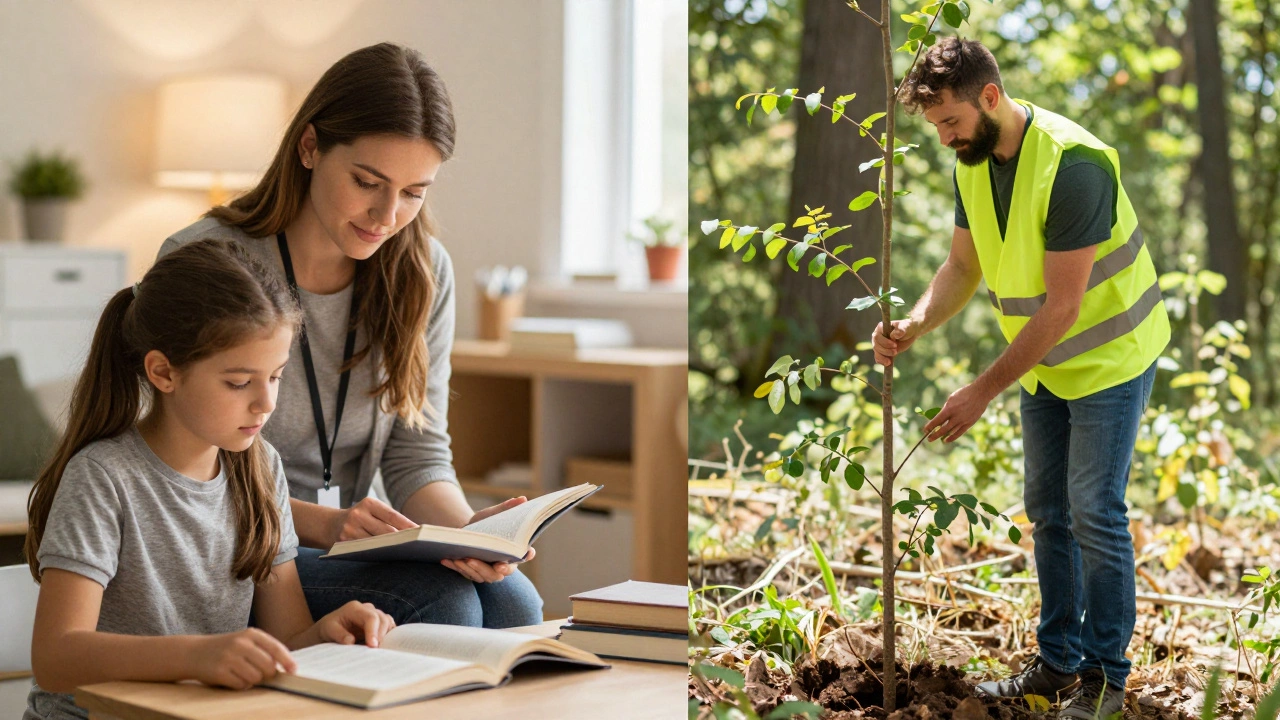
Women are more likely to volunteer in sectors focused on care, education, and human services. You’ll find them disproportionately represented in:
- Food Banks: Sorting donations, serving meals, and managing client interactions.
- Mental Health: Crisis hotlines, peer support groups, and counseling outreach.
- Youth Programs: After-school tutoring, mentoring, and coaching non-competitive activities.
- Charitable Trusts: Administrative roles, fundraising committees, and event planning.
Men are more likely to gravitate toward structured, skill-based, or physical roles. Common areas include:
- Environmental Groups: Trail maintenance, tree planting, and cleanup crews.
- Sports Organizations: Coaching teams, officiating games, and facility management.
- Emergency Services: Fire departments, search and rescue, and disaster response.
- Governance: Board positions, political campaigns, and civic committees.
This divide matters for nonprofits. If a mental health charity wants to diversify its board, it needs to actively recruit men who might not otherwise see themselves in that space. Conversely, environmental groups often struggle to retain female volunteers because the work is perceived as physically demanding or less socially interactive.
Why the Gap? Understanding the Motivations
So why do women volunteer more? Researchers point to several factors, ranging from socialization to economic reality.
Socialization and Empathy Norms From a young age, girls are often encouraged to be caregivers, helpers, and community builders. Boys are frequently steered toward leadership, competition, and individual achievement. These early lessons shape adult behavior. A woman might view volunteering as a natural extension of her identity, while a man might view it as an obligation or a side project.
Time Availability and Flexibility Paradoxically, women often have *less* free time due to the "second shift" of domestic responsibilities. Yet, they still volunteer more. How? Because their volunteering is often flexible. Caring for children at a library storytime can double as childcare. Tutoring can happen after school pick-up. Men’s volunteering is often more rigid-coaching a soccer team requires being there at 4 PM on Saturdays, no exceptions. This rigidity makes it harder for men with demanding careers to commit.
Professional Networking For many men, volunteering is a strategic move. Serving on a board or leading a campaign builds professional connections and enhances resumes. For women, volunteering is often driven by altruism or community connection. This difference in motivation affects retention. When the networking benefit fades, some men drop out. Women, driven by emotional connection to the cause, tend to stay longer.
The Changing Landscape: Are Men Catching Up?
While women still lead in overall numbers, the gap is narrowing in specific areas. Younger generations, particularly Millennials and Gen Z, show less rigid gender roles in volunteering. More young men are joining Homeless Services and Mental Health initiatives, breaking the stereotype that these are "women’s work."
Technology is also leveling the field. Online volunteering-translating documents, coding for nonprofits, or designing graphics-allows people to contribute without showing up physically. This appeals to tech-savvy men who prefer task-oriented, remote work over face-to-face caregiving. Platforms like Catchafire and UN Volunteers have seen a surge in male participants in digital roles.
In Wellington, local Community Outreach programs report that mixed-gender teams are more effective. They bring diverse skills: women often manage communication and logistics, while men handle infrastructure and technical setup. The best organizations don’t just accept this division; they leverage it.

Implications for Nonprofits and Recruiters
If you run a nonprofit, understanding these gender dynamics can help you recruit better. Here’s what works:
- Segment Your Messaging: Don’t use one ad for everyone. Appeal to empathy and community for women. Highlight impact, structure, and skill-building for men.
- Offer Flexible Roles: Create opportunities that fit into busy schedules. Micro-volunteering tasks (1-2 hours) attract men who can’t commit to long-term roles.
- Diversify Leadership: Actively invite men to join boards and committees in social service sectors. Invite women to lead projects in environmental and sports sectors.
- Recognize Different Contributions: Celebrate both the quiet, consistent work of administrative volunteers and the high-visibility efforts of event organizers.
Ignoring gender differences doesn’t make them go away. Acknowledging them allows you to build a stronger, more balanced volunteer base.
Informal vs. Formal Volunteering
One major caveat in all this data is the definition of "volunteering." Most surveys measure formal volunteering-working through an organization. But what about informal helping? Helping a neighbor move, watching a friend’s kids, or assisting a colleague?
Studies suggest that when informal helping is included, the gender gap shrinks significantly. Men are more likely to engage in informal, task-based helping (fixing things, moving furniture). Women are more likely to engage in both formal and informal emotional or care-based helping. So, if you broaden the lens, men are quite active-they just channel their energy differently.
This distinction is vital for policymakers. If the goal is to strengthen communities, both formal and informal contributions matter. We shouldn’t undervalue the uncle who fixes the community garden shed just because he doesn’t sign up for the weekly committee meeting.
Do women volunteer more hours than men?
Yes, on average, women who volunteer tend to donate more hours per year than men. While participation rates are close, women’s involvement is often more consistent and frequent, leading to a higher total time commitment.
Why do men volunteer less in social services?
Men often perceive social services as lacking structure or clear outcomes. They may also feel less comfortable in environments dominated by women. Additionally, societal norms often discourage men from expressing empathy in public settings, steering them toward more action-oriented roles.
Is the gender gap in volunteering closing?
Slowly. Younger generations show more flexibility in gender roles. Digital volunteering has also attracted more men by offering task-based, remote opportunities that align with professional skills rather than traditional caregiving roles.
What types of volunteering attract the most men?
Men are most drawn to sports coaching, emergency services, environmental conservation, and governance roles. These areas offer clear objectives, physical activity, or leadership opportunities.
How can nonprofits recruit more male volunteers?
Nonprofits should highlight the tangible impact of the work, offer flexible time commitments, and create roles that utilize professional skills like IT, finance, or project management. Framing volunteering as a chance to solve problems rather than just "help out" can be more appealing.