Environmental Mental Health Impact Estimator
How Your Environment Affects Mental Health
Your environment plays a significant role in mental health. Based on research from the University of Otago and other studies, this tool estimates your mental health risk based on environmental factors.
Environmental Factors
Your Mental Health Risk Assessment
Key Factors
It’s easy to think of mental illness as something that happens inside your head-genetics, brain chemistry, bad thoughts. But what if your neighborhood, your air, or the silence between people had just as much to say about it?
The air you breathe might be making you anxious
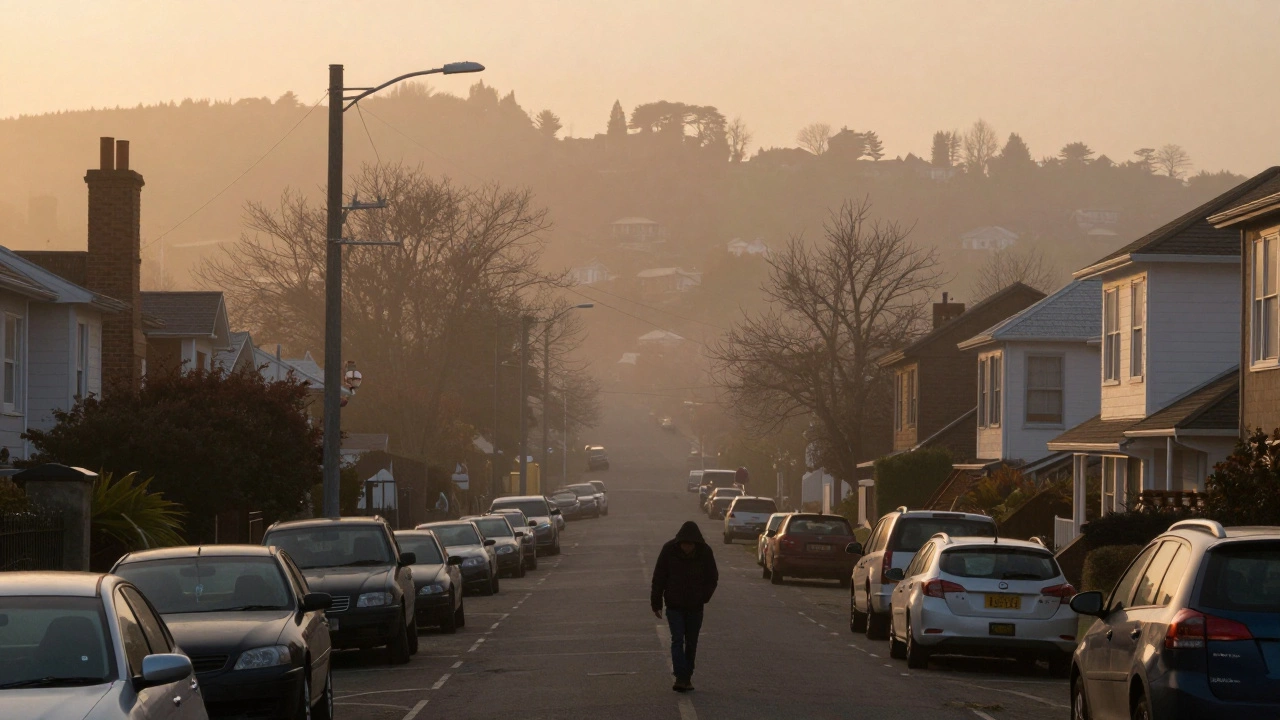
In Wellington, where the wind whips off the harbor and the hills roll green and steep, you’d think clean air means clean minds. But studies from the University of Otago show people living near busy roads have a 20% higher risk of developing depression and anxiety over five years. Fine particulate matter (PM2.5) doesn’t just clog lungs-it crosses the blood-brain barrier. Animal studies show it triggers inflammation in brain regions tied to mood regulation. In humans, long-term exposure to high PM2.5 levels is linked to increased hospital visits for psychosis and suicide attempts. It’s not just pollution from cars. Wood burners in winter, industrial emissions, even wildfire smoke from Australia’s worsening fire seasons-these all add up.
Noise isn’t just annoying. It’s toxic.
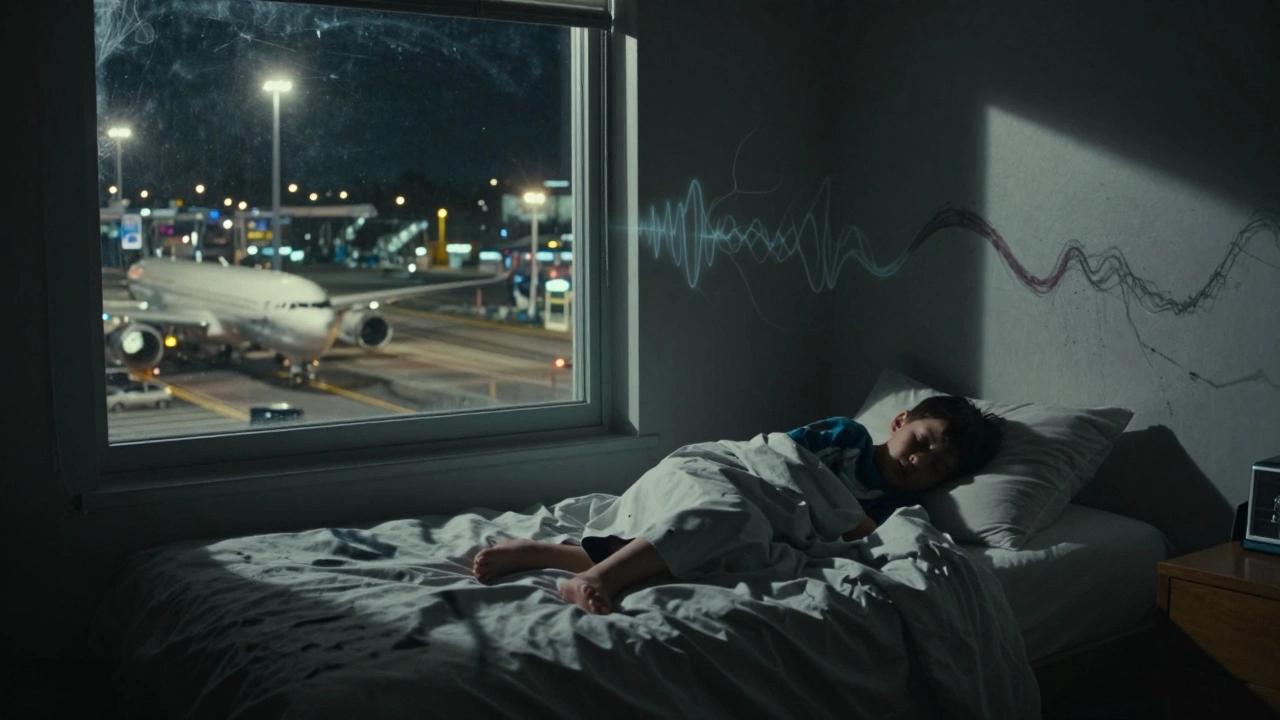
Think about the last time you couldn’t sleep because of a neighbor’s dog barking or a truck idling outside. Now imagine that happening every night for months. Chronic noise exposure-especially from traffic, airports, or construction-raises cortisol levels. That’s your body’s main stress hormone. Over time, elevated cortisol shrinks the hippocampus, the part of the brain responsible for memory and emotional control. A 2023 study in the Journal of Environmental Psychology tracked 12,000 adults across New Zealand and found those living under flight paths had a 35% higher chance of being diagnosed with depression. Children exposed to constant noise in schools show lower attention spans and higher rates of behavioral issues. Noise isn’t background. It’s a slow-acting poison.
Concrete jungles aren’t just cold-they’re isolating
Urban living comes with convenience: coffee shops, public transit, 24-hour pharmacies. But it also comes with less green space, fewer face-to-face interactions, and more people living alone. Research from the University of Auckland shows people in high-density suburbs with no parks or community gardens report feeling lonelier-even if they’re surrounded by thousands of others. Social isolation isn’t just about being alone. It’s about feeling unseen. In cities where neighbors don’t know each other’s names, the brain doesn’t get the signals it needs to feel safe. This lack of social cohesion is tied to higher rates of schizophrenia, bipolar disorder, and major depressive disorder. The more fragmented a neighborhood, the higher the mental health burden.
Climate change isn’t just about rising seas-it’s about rising dread
When your home floods every two years, when the bushfires come closer each summer, when the fishing season collapses because the water’s too warm-your sense of control erodes. This isn’t just sadness. It’s eco-anxiety, a real and growing psychological response to environmental collapse. A 2025 survey of 1,000 New Zealanders found 68% of people under 35 feel “helpless” about climate change, and 41% say it’s impacted their ability to work or sleep. For Indigenous communities, the loss of ancestral land isn’t abstract. It’s spiritual trauma. When you lose connection to place, you lose part of your identity. That grief doesn’t disappear. It becomes depression.
Childhood trauma and toxic environments go hand in hand
Children raised in homes with domestic violence, neglect, or constant instability are far more likely to develop mental illness. But that instability often mirrors their surroundings. Poor housing-leaky roofs, mold, overcrowding-isn’t just uncomfortable. It’s a chronic stressor. A child sleeping in a damp bedroom with no heating is constantly in fight-or-flight mode. Their brain develops differently. Studies show these kids have higher levels of cortisol at age 7 than peers in stable homes. By adolescence, they’re three times more likely to be diagnosed with anxiety or depression. And it’s not just the home. Schools in underfunded neighborhoods often lack counselors, safe playgrounds, or even clean water. The environment doesn’t just shape behavior-it rewires development.
What changes when the environment changes
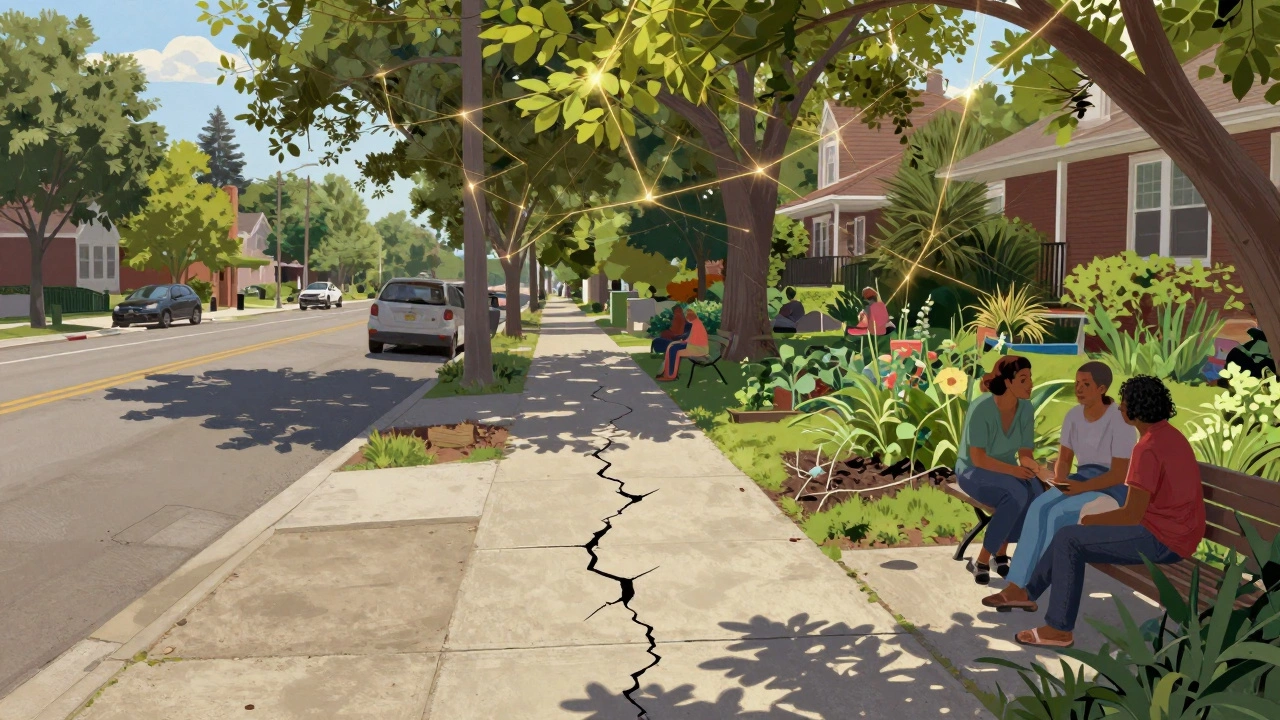
It’s not all doom. When environments improve, mental health improves too. In 2022, the city of Dunedin planted 15,000 native trees across low-income neighborhoods. Two years later, residents reported a 27% drop in feelings of hopelessness. Community gardens in Christchurch reduced loneliness among seniors by 40%. Access to green space-even a small park-lowers stress hormones within 20 minutes of sitting in it. Safe, walkable streets with benches and lighting encourage people to talk to neighbors. These aren’t luxuries. They’re mental health infrastructure.
It’s not just personal-it’s political
You can’t meditate your way out of air pollution. You can’t yoga your way out of a noisy highway built through your street. Mental health isn’t just about therapy or pills. It’s about zoning laws, public transport funding, housing policy, and who gets to live near parks versus power plants. When environmental groups fight for cleaner air or quieter neighborhoods, they’re not just protecting nature. They’re protecting minds. The same people pushing for bike lanes are also reducing depression rates. The same volunteers planting trees are healing trauma one root at a time.
What you can do
- Advocate for green space in your local council meetings. Demand tree planting, parks, and community gardens in underserved areas.
- Support noise-reduction policies-like quieter road surfaces, flight path restrictions, and limits on nighttime construction.
- Join or start a neighborhood group that connects people. Even a monthly coffee meet-up can rebuild the social fabric.
- Reduce your own environmental impact. Less car use, fewer single-use plastics, supporting clean energy-these aren’t just eco-actions. They’re acts of mental health care.
Healing the planet isn’t separate from healing people. They’re the same thing. When we clean the air, quiet the noise, and bring people together, we’re not just fixing the environment. We’re giving minds room to breathe again.
Can pollution really cause depression?
Yes. Multiple studies, including those from the University of Otago and the World Health Organization, link long-term exposure to air pollution-especially PM2.5-to higher rates of depression and anxiety. Pollution triggers inflammation in the brain, disrupts neurotransmitter systems, and increases stress hormones. It’s not a minor factor-it’s a measurable public health risk.
Does living in a city make you mentally ill?
Not by itself. But urban environments often lack the things that protect mental health: green space, social connection, quiet, and safety. Cities with high density, no parks, and poor housing have higher rates of psychosis and depression. The problem isn’t the city-it’s how cities are built. Walkable neighborhoods with community spaces show much better mental health outcomes.
Is eco-anxiety a real diagnosis?
Eco-anxiety isn’t listed as a standalone disorder in the DSM-5, but it’s recognized by the American Psychological Association as a legitimate emotional response to ecological threats. It’s not a mental illness-it’s a rational reaction to real danger. When people feel powerless about climate change, it can lead to depression, insomnia, and withdrawal. Therapy and community action help manage it.
How does noise affect children’s mental health?
Chronic noise-like traffic or airplanes-impairs concentration, increases stress, and disrupts sleep in children. Studies show kids in noisy schools score lower on reading tests and have higher rates of behavioral problems. Their developing brains are more sensitive to stress hormones. Noise isn’t just a distraction; it’s a developmental risk.
Can planting trees improve mental health?
Yes. A 2023 study in Dunedin found that neighborhoods with 10% more tree cover saw a 27% drop in reported depression symptoms over two years. Trees reduce noise, improve air quality, and create spaces for social connection. Even looking at greenery for a few minutes lowers cortisol. It’s not magic-it’s biology.
Why do environmental groups care about mental health?
Because protecting the environment isn’t just about saving polar bears or clean rivers. It’s about protecting people’s minds. Pollution, noise, isolation, and climate fear are mental health emergencies. Environmental groups that push for clean air, quiet neighborhoods, and green spaces are also fighting for psychological safety. The two are inseparable.