NZ Budget Meal Planner
How many meals can you make?
Calculate your affordable meals using the cheapest staples from New Zealand food banks.
Enter your budget and staple to see how many meals you can make
When your bank account hits zero and the fridge is empty, eating doesn’t have to mean going hungry. In New Zealand, you’re not alone-thousands of people rely on food banks and smart strategies to get through tough months. The truth is, eating well on next to nothing isn’t about magic. It’s about knowing where to look, what to grab, and how to stretch every dollar-and every can-further.
Start with your local food bank
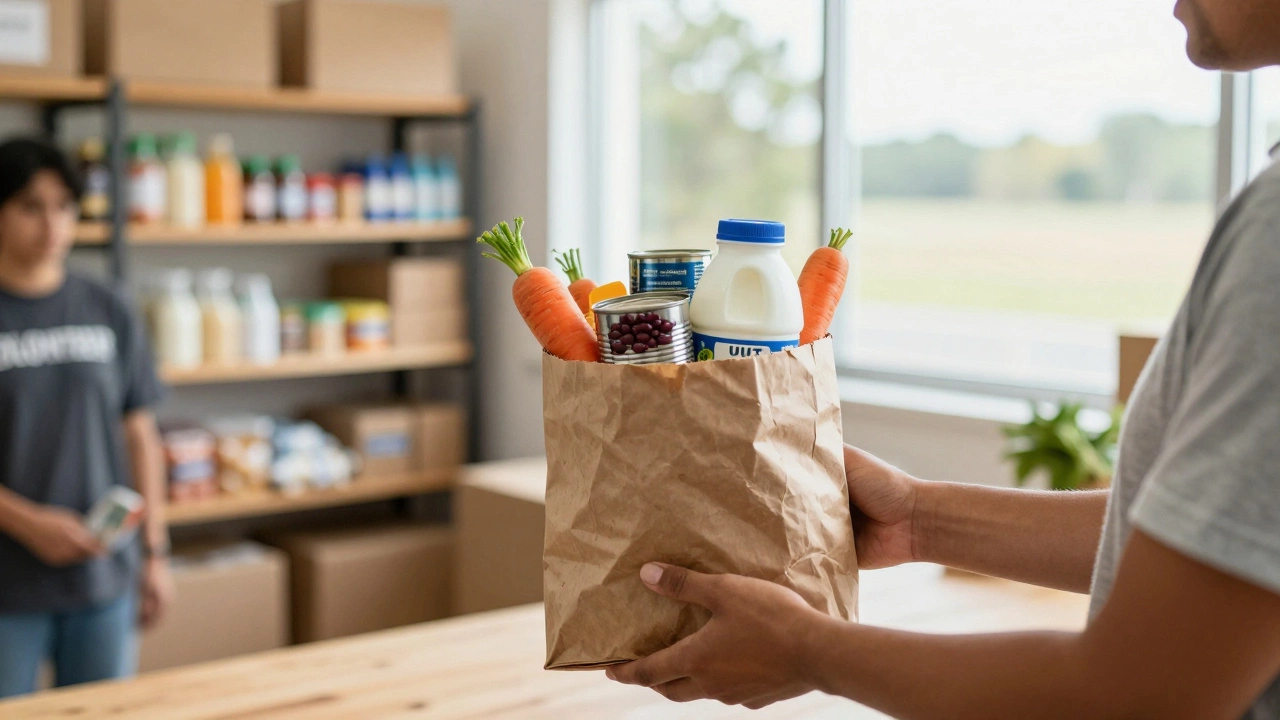
Food banks aren’t just for emergencies. They’re a regular support system for families, students, retirees, and people between jobs. In Wellington, places like Foodbank Wellington and St. Vincent de Paul offer free groceries once a week. You don’t need proof of income. You don’t need to explain your situation. Just walk in, show your ID, and they’ll give you enough for a few meals.What you’ll usually find: canned beans, pasta, rice, tinned fish, vegetables, UHT milk, bread, and sometimes fresh fruit or eggs. Some locations even have hygiene items like soap and toothpaste. Don’t turn up expecting luxury. Do turn up expecting dignity. These places are run by people who’ve been there too.
Check the Foodbank NZ website for locations and hours. Most are open weekday afternoons. Call ahead if you’re unsure-some require bookings now due to high demand.
Build meals around the cheapest staples
The most filling, affordable foods aren’t fancy. They’re simple. And they’re usually what food banks give out anyway.- Rice - A kilo costs less than $2 and fills two people. Cook it with a pinch of salt and a splash of soy sauce.
- Dried beans - Soak overnight, boil for an hour. Add onion, garlic, and canned tomatoes. That’s a full meal. A kilo lasts weeks.
- Oats - Buy the big tub. Cook with water, add a banana or a spoon of peanut butter if you have it. Breakfast for days.
- Pasta - Pair with tomato sauce and a sprinkle of cheese. Add chopped carrots or frozen peas to stretch it.
- Potatoes - Boil, bake, or mash. They’re cheap, filling, and store for weeks.
These aren’t fancy meals. But they keep you alive. And they’re better than skipping meals or eating takeaway once a week and running out of cash again.
Use frozen and discounted produce
Supermarkets don’t throw out food-they mark it down. Walk into Countdown, New World, or Pak’nSave after 6pm. Look for the yellow stickers. That’s the “reduced for quick sale” section.You’ll find:
- Bagged salad with a wilted leaf or two - rinse it, dry it, it’s fine.
- Apples with a bruise - cut it out. Still sweet.
- Chicken thighs or mince nearing expiry - freeze it the second you get home.
Frozen vegetables are just as nutritious as fresh. And they last months. Buy a bag of mixed peas, carrots, and corn. Toss them into rice, pasta, or soup. You’ll get vitamins without the cost.
Make one pot, eat three times
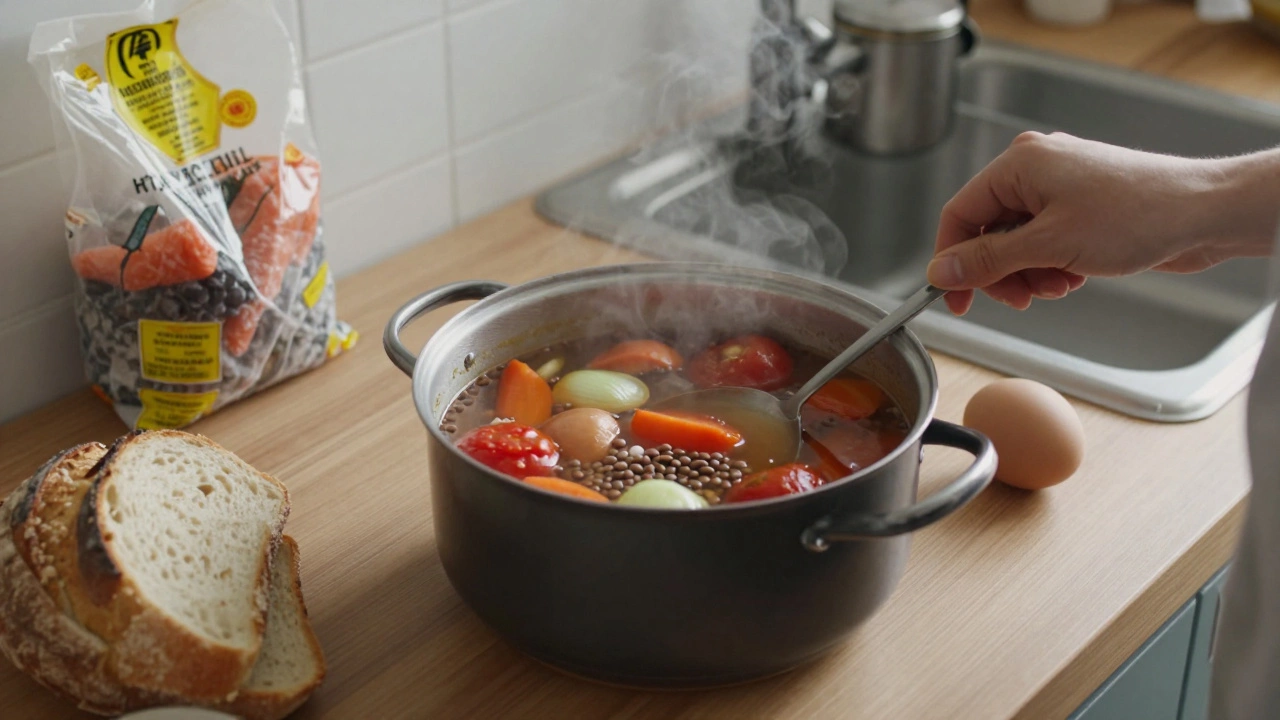
Cooking once saves time, money, and energy. A big pot of soup or stew can feed you for days.Here’s a basic recipe you can make with almost nothing:
- Chop one onion and two carrots (use the discounted ones).
- Throw in a can of beans, a can of tomatoes, and a cup of dried lentils.
- Add water, a stock cube (if you have it), salt, pepper, and a bay leaf.
- Simmer for 45 minutes.
That’s a pot of soup. Eat it for lunch. Reheat it for dinner. Turn the leftovers into a stew with rice the next day. You’ve turned $5 of ingredients into three meals.
Don’t ignore community kitchens and free meals
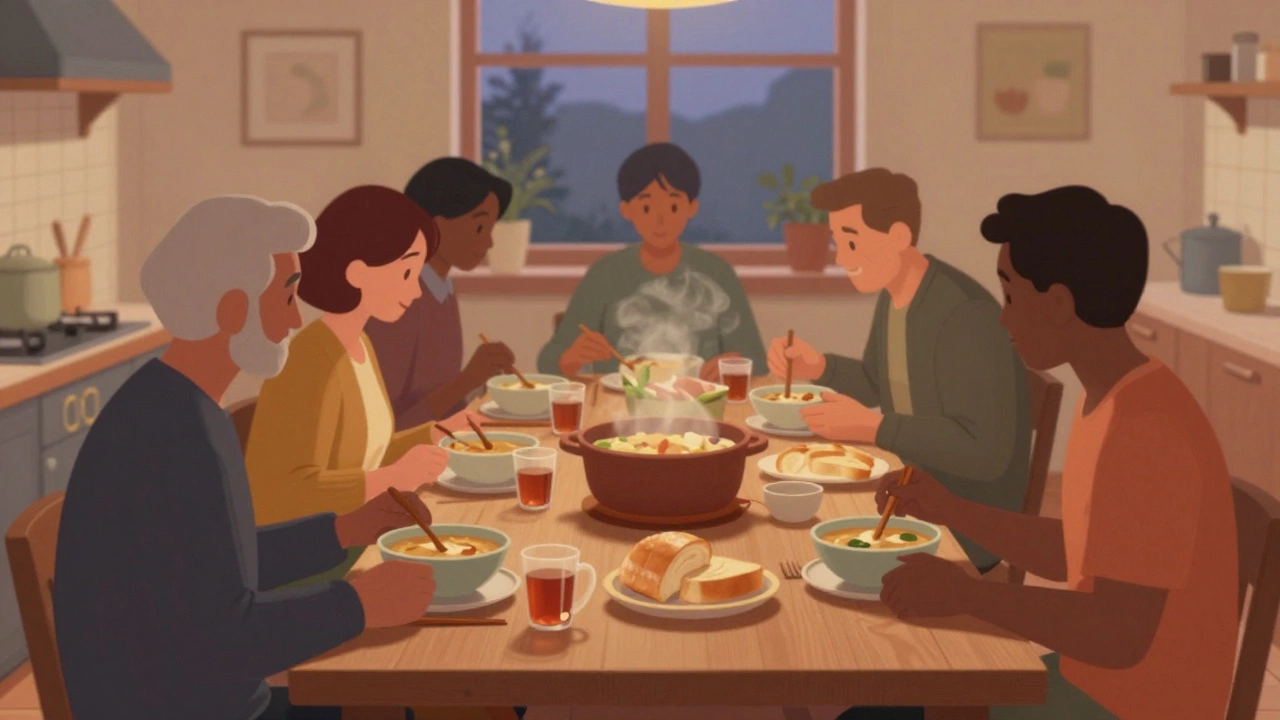
Some churches, community centers, and charities serve free hot meals. In Wellington, places like St. John’s Kitchen and Wellington City Mission offer lunch or dinner five days a week. No questions asked. Just show up.These aren’t charity dinners. They’re community meals. People sit together. You might meet someone who knows about a job, a housing help line, or a free dental clinic. The food is simple-soup, bread, maybe a piece of cake-but it’s hot, it’s nourishing, and it’s there when you need it.
Learn to use what you have
You don’t need fancy tools or expensive ingredients to make food last. A few tricks go a long way:- Save vegetable peels and ends. Boil them in water for 30 minutes. Strain. You’ve got free broth.
- Stale bread? Make breadcrumbs or bread pudding. Add a bit of milk and sugar if you have it.
- Leftover rice? Fry it with an egg and soy sauce. That’s fried rice.
- Wilted herbs? Chop them up and freeze in ice cube trays with a little oil. Use later in soups.
These aren’t tricks for foodies. They’re survival skills. People have used them for centuries. And they still work.
Know your rights and support options
If you’re struggling, you might be eligible for government help. Jobseeker Support or Sole Parent Support from Work and Income can give you a weekly payment. You can also apply for a Community Services Card-it cuts the cost of prescriptions, public transport, and sometimes even utility bills.You don’t need to be homeless to qualify. You just need to be struggling. Talk to a Work and Income advisor. Bring your ID, bank statements, and any bills. They’re there to help, not judge.
There are also free food vouchers available through some charities. Ask at your local food bank-they often know which programs are running.
What to avoid
When you’re broke, it’s easy to fall into traps that make things worse:- Buying cheap junk food - A $2 packet of chips won’t fill you up. It’ll leave you hungrier and less energized.
- Using payday loans - They trap you in debt. That $50 loan costs you $70 next week.
- Ignoring your health - Skipping meals doesn’t save money long-term. It costs you energy, focus, and your body’s ability to fight illness.
Food isn’t just fuel. It’s how you stay strong enough to find your way out.
When things get really hard
If you’re sleeping in your car, couch-surfing, or skipping meals for days, reach out. Don’t wait until you’re too weak to call.Call 1737 (Need to Talk?) for free, 24/7 support. Text or call 0800 22 27 27 (Free) to speak with a counselor who can connect you with food, housing, or financial help.
Or go to your nearest Community Law Centre. They offer free advice on benefits, housing, and debt. No appointment needed.
You’re not failing. The system isn’t perfect. But help exists-and you’re allowed to ask for it.
Can I get food from a food bank without ID?
Most food banks in New Zealand ask for a form of ID-like a driver’s license, student card, or even a utility bill-to track demand and ensure fair distribution. But if you don’t have any ID, call ahead. Many will still help you. They care more about your need than your paperwork.
How often can I visit a food bank?
Most food banks allow one visit per week. Some, like St. Vincent de Paul, offer twice a month if you’re on a low income. Others may stretch it to every two weeks depending on supply. Don’t feel guilty. This is a service designed for people in your situation.
Do food banks give fresh food?
Yes. Many food banks now include fresh produce, eggs, dairy, and even meat when they can get donations. It’s not every day, but it’s becoming more common. Ask when you go. Some locations have partnerships with local farms or supermarkets that donate surplus fresh food.
Can I get help if I’m working but still can’t afford food?
Absolutely. Many people who use food banks have jobs. Wages haven’t kept up with rent and food prices. If you’re working but running out of money before payday, you’re not alone. Food banks don’t check your employment status. And you can apply for Working for Families tax credits or a Community Services Card even if you’re employed.
What if I’m too ashamed to go to a food bank?
Feeling ashamed is normal-but it’s not true. You didn’t fail. The cost of living has risen faster than wages. Food banks exist because society recognizes that no one should choose between rent and food. The people who run them have seen thousands of people in your position. They don’t judge. They’re glad you came.
If you’re reading this and you’re stuck, you’re not broken. You’re just in a hard time. And there are people, places, and meals waiting to help you through it. Start small. Walk into a food bank. Make one pot of soup. Call 1737. You don’t have to do it all today. But you don’t have to do it alone either.