Conservation Strategy Matcher
Select the environment that best describes your project site to see the recommended conservation focus.
Pro Tip:
Key Takeaways for Conservationists
- Environments are split into terrestrial, aquatic, and artificial systems.
- Each type requires specific restoration techniques (e.g., reforestation vs. wetland dredging).
- Urban environments are now recognized as critical hubs for biodiversity.
- Understanding the 'edge effect' helps groups protect transition zones between environments.
The Ground We Walk On: Terrestrial Environments
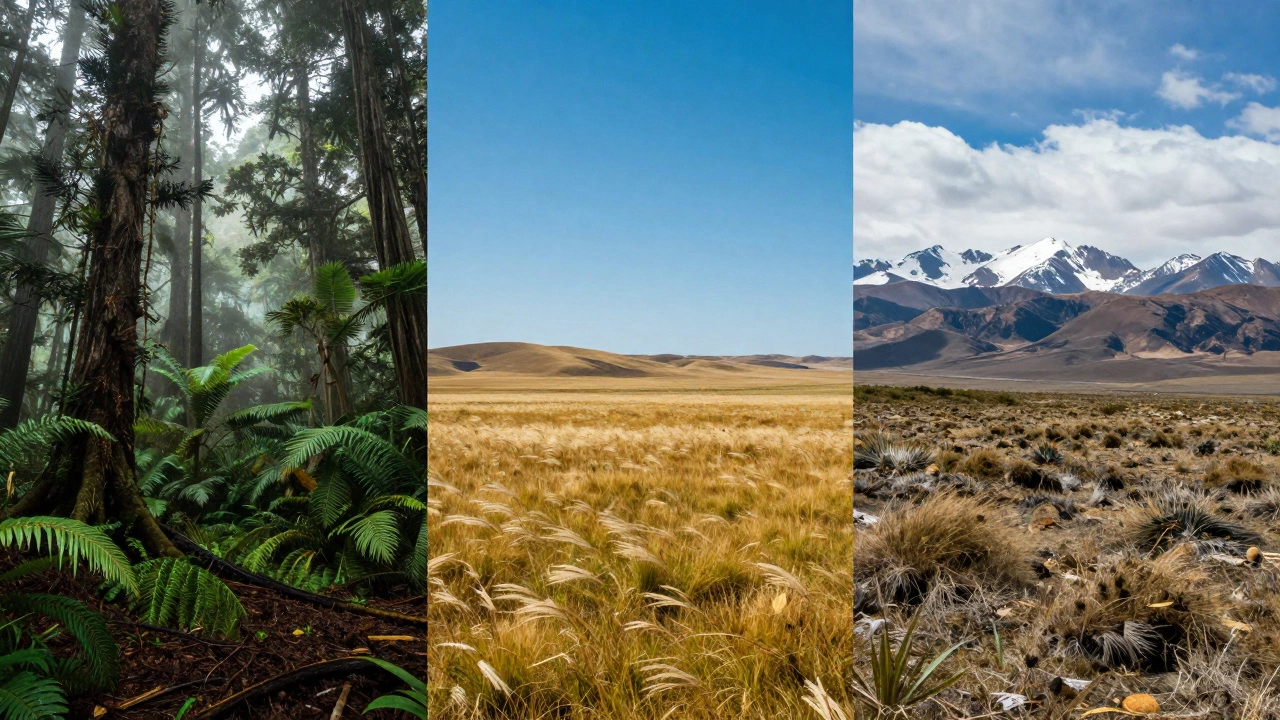
When we talk about land-based systems, we're dealing with Terrestrial Environments is a category of ecosystems located on landforms, characterized by the absence of standing water as the primary medium. These are the most diverse areas and the ones most frequently targeted by local volunteer groups. But 'land' is a broad term. You've got everything from the towering redwoods of California to the sandy dunes of the Sahara.
For a community group, the biggest challenge here is soil health. In a forest, the nutrient cycle happens through decomposing leaves. In a grassland, it's all about root systems. If you're planting trees in a region that was naturally a prairie, you're not actually helping the environment-you're changing it. This is why professional ecological surveys are a must before any planting day. You need to know if you're dealing with an alpine tundra, a temperate forest, or a scrubland.
The World of Water: Aquatic Environments
Water covers about 71% of our planet, but not all water is the same. Aquatic Environments is the broader classification of ecosystems found in water bodies, split between saltwater and freshwater systems. If your group is organizing a river cleanup or a beach sweep, you're working in this zone. The dynamics here are completely different because you're dealing with currents, salinity, and dissolved oxygen.
You can break these down into two main camps: Marine and Freshwater. Marine environments include the open ocean and coral reefs. Freshwater systems include lakes, streams, and Wetlands is areas where water covers the soil or is present at or near the surface of the soil all year round. Wetlands are the unsung heroes of the planet; they act as giant sponges that prevent flooding in nearby towns. If a local developer wants to pave over a marsh, that's where environmental groups need to step in with the most aggression, as these areas are incredibly efficient at sequestering carbon.
The Human Footprint: Built or Artificial Environments
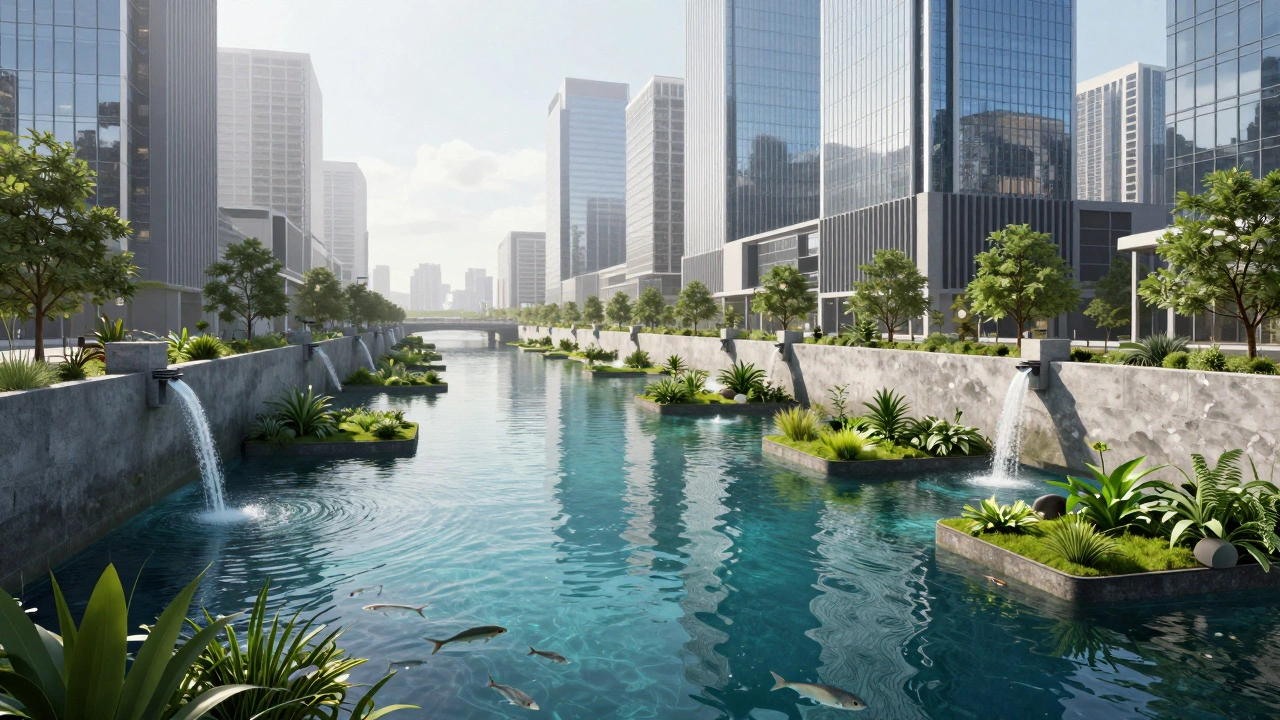
Some people argue that a parking lot isn't an 'environment,' but from a biological perspective, it absolutely is. Artificial Environments is ecosystems that are created or heavily modified by humans, such as cities, farmland, and industrial zones. We call these 'anthropogenic' environments. For most of us, this is where we spend 90% of our time.
Working in these areas requires a different toolkit. You aren't just fighting pollution; you're fighting the 'Urban Heat Island' effect, where concrete and asphalt soak up heat and make cities several degrees hotter than the countryside. This is why 'urban greening' is such a huge trend. By adding rooftop gardens or planting street trees, we create corridors that allow birds and pollinators to move through the city without dying of exhaustion or heatstroke.
The Mix: Transitional and Hybrid Environments
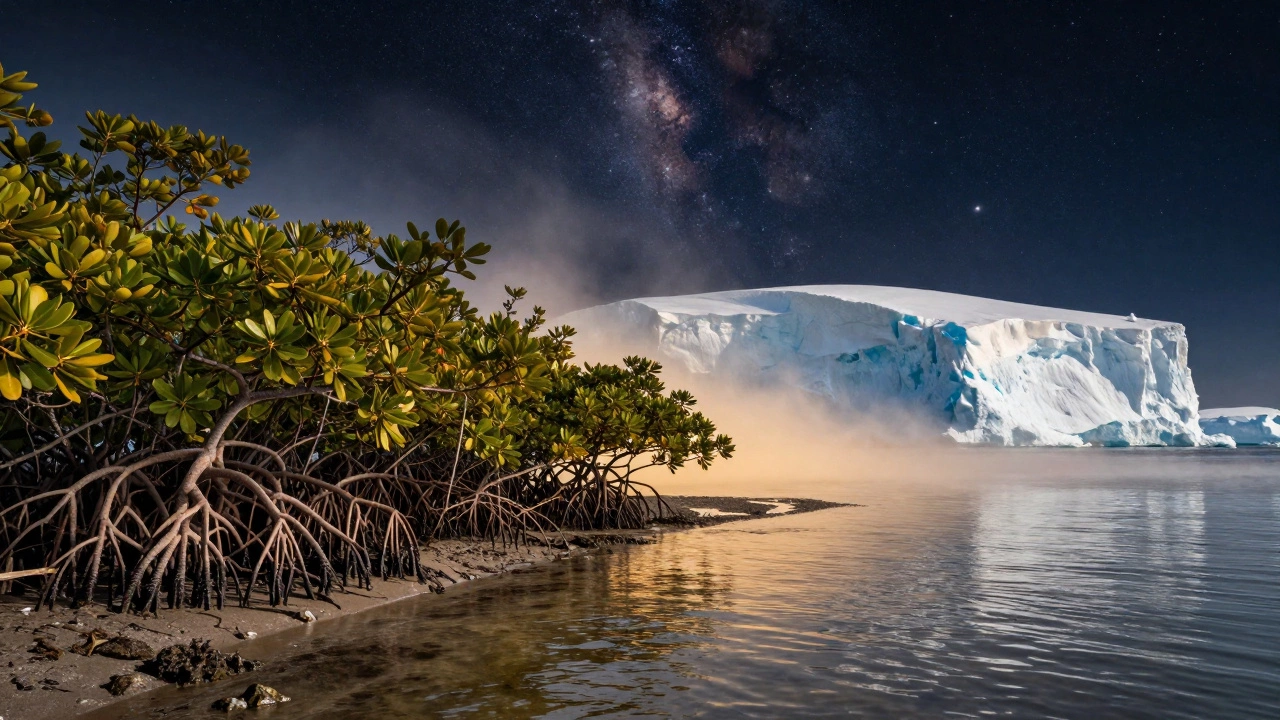
Nature rarely has clean lines. There are zones where two different environments crash into each other. This is known as an Ecotone is a transition area between two biological communities, where two ecosystems meet and integrate. Think of a mangrove forest-it's where the land meets the sea. It's neither fully terrestrial nor fully aquatic, but it's one of the most productive places on Earth.
These hybrid zones are often the most fragile. If you destroy a strip of shoreline to build a boardwalk, you aren't just losing a few feet of sand; you're destroying the nursery for countless fish species and the shield that protects the inland soil from salt spray. For environmental groups, protecting the 'edge' is often more important than protecting the center of a forest.
The Extreme: Specialized and Harsh Environments
Finally, we have the environments that seem hostile to life: the deep sea, the polar ice caps, and the high deserts. Extreme Environments is regions with physical or chemical conditions that are detrimental to most life on Earth, such as high pressure, extreme cold, or high salinity. While your local neighborhood group might not be diving into the Mariana Trench, these areas are the 'canaries in the coal mine' for climate change.
When the permafrost melts in the Arctic, it releases methane, which speeds up global warming. This creates a feedback loop that affects every other environment on the list. Understanding these extremes helps us realize that the planet is a closed system. What happens at the poles eventually hits the coastlines of New Zealand or the forests of the Amazon.
| Environment Type | Primary Challenge | Key Restoration Goal | Example |
|---|---|---|---|
| Terrestrial | Soil Erosion | Reforestation / Biodiversity | Amazon Rainforest |
| Aquatic | Water Pollution | Water Quality / Oxygenation | Great Barrier Reef |
| Artificial | Heat Islands | Urban Greening / Permeability | New York City |
| Transitional | Habitat Fragmentation | Buffer Zone Protection | Mangrove Swamps |
| Extreme | Rapid Climate Shift | Carbon Sequestration | Antarctic Ice Sheet |
How to Choose Your Group's Focus
If you're starting a new environmental group, don't try to tackle all five. You'll burn out. Instead, look at your local map. Do you have a creek that's clogged with plastic? Focus on the aquatic. Is there a vacant lot that's just a dust bowl? Target the artificial. The most successful groups are those that identify the specific environmental type they live in and master the science of that particular niche.
One common mistake is ignoring the 'invisible' environment: the air. While we categorize things by land and water, the atmosphere is the overarching layer that connects them all. Whether you're planting a tree or cleaning a pond, you're essentially working to improve the air we breathe and the climate we live in. Everything is connected through the carbon cycle and the water cycle.
Why should my group care about artificial environments?
Because that's where most people live. If you can show city dwellers that a 'pocket park' or a green roof improves their mental health and lowers their cooling bills, you'll get more volunteers and funding than if you only focus on distant wildernesses.
What is the difference between a habitat and an environment?
An environment is the broad set of surroundings (like 'The Ocean'), while a habitat is the specific place within that environment where a particular species lives (like 'The Coral Reef'). An environment can contain thousands of different habitats.
Can one area be two types of environments at once?
Yes, and that's exactly what happens in transitional environments or ecotones. For example, a saltwater marsh is both terrestrial (it has land/soil) and aquatic (it's flooded by tides). These are often the most biodiverse areas.
Which environment is the most critical to protect right now?
It depends on the goal. For immediate carbon capture, wetlands and old-growth forests are king. For preventing mass extinction, coral reefs and rainforests are the priority. For human survival in the next 50 years, fixing our artificial urban environments is a must.
How do I identify the environment type of my local area?
Look at the dominant features. If it's mostly concrete and buildings, it's artificial. If it's dominated by a river or lake, it's aquatic. If it's forest or grassland, it's terrestrial. If it's a mix, like a riverbank with trees, you're looking at a transitional zone.
Next Steps for Your Project
If you're ready to take action, start with a site analysis. Walk your chosen area and note where one environment ends and another begins. This will tell you where the 'stress points' are. For instance, if you see trash piling up where a city street meets a creek, you've found a critical intersection between an artificial and an aquatic environment. That's your target zone.
Once you've identified the type, research the native species for that specific zone. Don't just buy the cheapest plants at the garden center; buy the ones that belong in that environment. Planting non-native species is a fast way to accidentally introduce invasive pests and ruin the very ecosystem you're trying to save.