
Teen Driver Sizing Calculator
Input Measurements
Enter your child's physical stats to determine the optimal driver specifications.
Recommendation
Enter measurements to see personalized driver recommendations for your 14-year-old golfer.
It’s that awkward age. Your kid is too big for the bright yellow "junior" sets at the back of the store, but they’re still growing like crazy and definitely aren’t ready to swing full-size adult drivers. You walk into a pro shop, ask what size driver fits a 14-year-old, and get three different answers from three different staff members. It’s frustrating.
The truth is, there isn’t one single "size" for a 14-year-old. At this age, kids are all over the map physically. One might be 5'2" and lean, while another is 6'0" and built like a linebacker. Using the wrong driver doesn't just look silly; it ruins their swing mechanics, hurts their confidence, and can even cause injury. Getting the fit right is about more than just hitting the ball further-it’s about building good habits now so they don’t have to unlearn bad ones later.
Why Height Alone Doesn't Tell the Whole Story
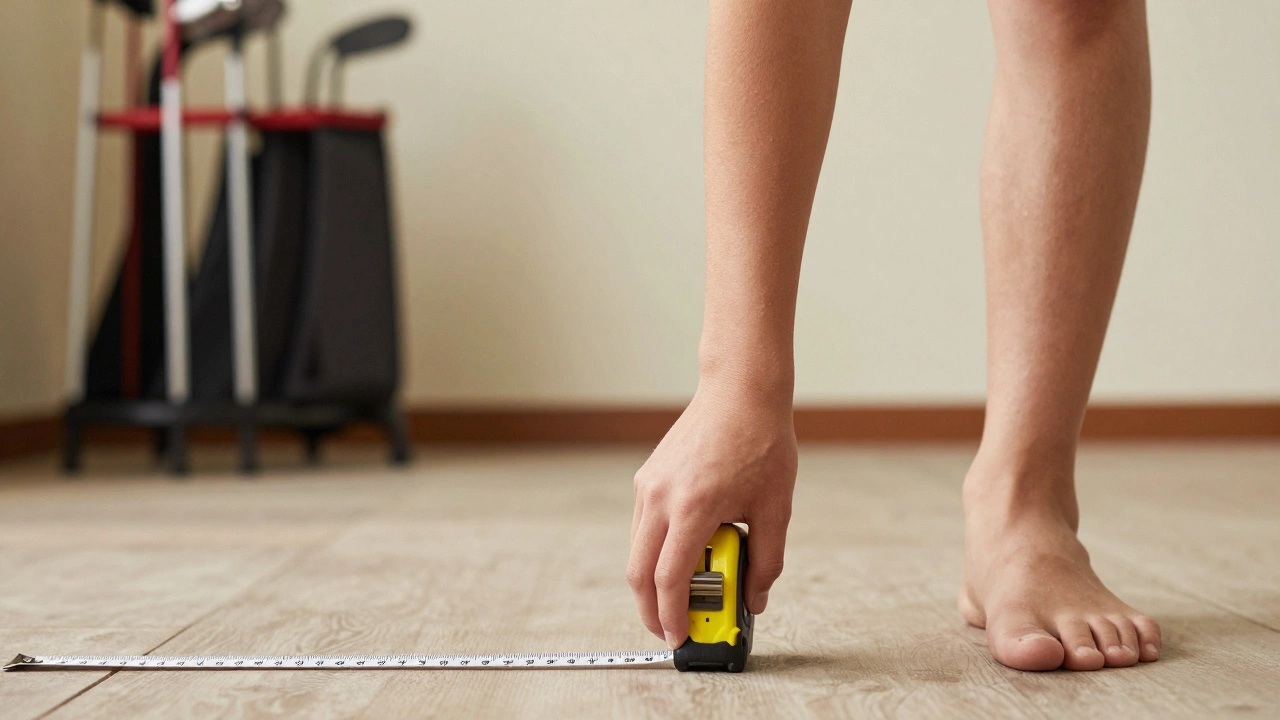
Most people think you just measure height and pick a number. If your child is 5'5", you grab a 43-inch club. Simple, right? Not quite. In golf, wrist-to-floor measurement matters far more than total height. This measurement determines the correct shaft length, which is critical for posture.
If a driver is too long, your teen has to stand up during their swing to make contact. This leads to thin shots, tops, and inconsistent distance. If it’s too short, they’ll hunch over, causing back strain and forcing them to dig into the turf with every shot. The goal is a neutral spine angle where they can address the ball comfortably without compromising their balance.
Here is how you measure wrist-to-floor correctly:
- Have your child stand straight with arms hanging naturally at their sides.
- Shoes matter: they should wear the same athletic shoes they plan to play in.
- Measure from the crease of the wrist (where the hand meets the arm) down to the floor.
- Compare this number to standard sizing charts rather than relying on height alone.
A 14-year-old who is 5'8" but has shorter arms might need a shorter club than a 5'6" peer with longer limbs. Ignoring arm length is the most common mistake parents make when buying equipment.
Graphite vs. Steel: The Weight Factor
At 14, strength varies wildly. Some teens have the power of an adult amateur; others are still developing core strength. This is where graphite shafts become essential. Unlike steel irons, drivers almost always use graphite because it’s lighter and helps generate head speed.
For a younger or smaller 14-year-old, a heavy adult driver will slow their swing speed down significantly. They’ll fight the club, leading to late releases and slices. Look for "regular" or even "senior" flex graphite shafts if they lack upper body strength. These lighter options allow them to swing freely, generating momentum through impact rather than muscle force.
Conversely, if your teen is already playing competitive high school golf and swings fast, a lightweight senior-flex shaft might feel "whippy" or unstable. In that case, a standard regular-flex adult shaft is better. The key test is simple: watch them hit balls. If the clubhead lags behind their hands at impact, the shaft is too flexible. If they struggle to get the clubhead moving, it’s too stiff.
Standard Lengths for Teenagers
While custom fitting is ideal, most 14-year-olds fall into one of two categories: oversized junior clubs or shortened adult clubs. Here is a general guide based on average heights and wrist-to-floor measurements for this age group.
| Approximate Height | Wrist-to-Floor | Recommended Driver Length | Club Type |
|---|---|---|---|
| 4'11" - 5'2" | 29" - 31" | 41" - 42" | Oversized Junior |
| 5'3" - 5'5" | 31" - 32" | 42.5" - 43" | Youth/Transition |
| 5'6" - 5'8" | 32" - 33" | 43" - 44" | Short Adult / Standard |
| 5'9"+ | 33"+ | 44" - 45" | Full Adult Size |
Note that standard adult drivers are typically 45.5 inches long. For most 14-year-olds, this is simply too long. A 43-inch or 44-inch driver provides better control and consistency. Don't be afraid to buy an adult head and have the shaft cut down by a professional. It’s often cheaper and more effective than buying a specialized "teen" set that may not have the technology you want.
Loft and Forgiveness: Hitting the Ball Straight
Young golfers rarely hit the center of the face perfectly. That’s why loft and forgiveness are critical specs. An adult tour-level driver might have 9 or 10 degrees of loft. For a 14-year-old, this is usually too low. Lower loft requires precise contact to get the ball airborne.
Look for drivers with 10.5 to 12 degrees of loft. Higher loft helps launch the ball higher with less effort, which is forgiving for off-center hits. Additionally, prioritize "game-improvement" drivers. These clubs have larger sweet spots and perimeter weighting. When your teen hits the toe or heel of the club-a very common miss-the ball won’t lose as much distance or curve as drastically as it would with a blade-style driver.
Also consider the lie angle. While lie angle is more critical for irons, a driver that is too flat or too upright can affect direction. Most standard drivers work fine, but if your child consistently slices (curves right for right-handers), ensure the club isn't excessively upright. If they hooks (curves left), check if it's too flat. However, at this stage, focus mostly on length and weight.

The Growth Spurt Problem
Buying gear for a 14-year-old is tricky because they might grow six inches before next summer. You don’t want to buy a $400 driver that becomes useless in six months. Here is a practical strategy:
Buy slightly longer, not shorter. It is easier to adjust to a club that is half an inch too long than one that is too short. A slightly long club encourages standing up slightly, which is a minor flaw. A short club forces hunching, which is a major mechanical error. If you buy an adult driver, have it installed with a little extra grip tape so you can trim it later if needed, or choose a model where extensions are easy to add.
Another option is modular shafts. Some brands offer adjustable hosels that allow you to change length and loft. While these features are marketed for fine-tuning, they can help extend the life of the club as your child grows. Just remember that adjusting length changes the swing weight, so keep adjustments minimal.
When to See a Professional Fitter
If your budget allows, take your child to a local pro shop for a fitting. Many shops offer "youth fittings" that are faster and cheaper than adult sessions. They use launch monitors to track ball speed, spin rate, and launch angle. This data removes the guesswork.
A fitter can also assess grip size. Small hands on large grips lead to tension in the forearms, restricting wrist hinge. If your teen’s fingers barely overlap when holding the grip, they need a junior or women’s size grip. Proper grip size ensures they can release the club properly through impact, adding significant distance and accuracy.
Finally, remember that technique trumps equipment. A perfectly fitted driver won’t fix a flawed swing. Use this time to invest in lessons alongside new gear. The best driver for a 14-year-old is one that inspires confidence and makes practice fun. If they love swinging it, they’ll improve faster-and that’s the real goal.
Can a 14-year-old use a full-size adult driver?
Yes, but only if they are tall enough (usually over 5'9") and strong enough. Most 14-year-olds need a driver between 42 and 44 inches long, whereas adult drivers are typically 45.5 inches. Using a full-length adult driver can cause poor posture and inconsistent contact. If using an adult head, have the shaft shortened to fit their wrist-to-floor measurement.
How do I measure my child for a golf driver?
The most accurate method is measuring wrist-to-floor. Have your child stand straight in their golf shoes with arms hanging naturally. Measure from the bottom of the wrist bone (the crease) to the floor. Compare this number to manufacturer sizing charts. Height alone is not reliable because arm lengths vary significantly among teenagers.
What loft should a beginner 14-year-old driver have?
A loft between 10.5 and 12 degrees is ideal for most 14-year-old beginners. Higher loft helps get the ball airborne more easily and provides more forgiveness on off-center hits. Avoid low-loft drivers (9 or 10 degrees) unless your child has a very fast swing speed and consistent contact pattern.
Should I buy graphite or steel shafts for a teenager?
Always choose graphite for drivers. Graphite shafts are lighter, which helps increase swing speed and reduces fatigue. Steel shafts are generally used for irons and wedges, not drivers. For a 14-year-old, look for a regular or senior flex graphite shaft depending on their strength and swing speed.
Is it worth getting a custom fit for a growing teen?
It can be worthwhile if you plan to keep the club for several years. A proper fit ensures correct length, lie angle, and grip size, promoting better swing mechanics. However, since teens grow quickly, consider buying a slightly longer club that can be adjusted or trimmed as they mature. Focus on getting the length and grip size right first.