Wacky Day Activity Generator
Not sure what a Wacky Day looks like? Click the button below to generate a random activity idea or dress-up theme based on common school practices.
You’ve probably heard teachers whispering about it or seen kids buzzing with excitement in the hallways. Wacky Day is a designated school event where normal rules are relaxed to encourage creativity, humor, and unconventional learning. It’s not just a free-for-all; it’s a strategic break from the rigid academic routine that helps students decompress while still engaging their brains. If you’re wondering why your child is coming home with paint on their shirt or wearing socks on their hands, this guide breaks down exactly what happens, why schools do it, and how you can support the chaos.
The Core Concept Behind the Chaos
At its heart, a Wacky Day is about breaking patterns. Schools operate on strict schedules: bells ring, lessons start, silence is golden. This structure is necessary for learning core subjects, but it can also lead to burnout. Educators use Wacky Days to reset the classroom dynamic. By introducing absurdity-like upside-down classrooms, silly hats, or bizarre dress codes-teachers signal that it’s safe to be weird. This psychological shift lowers anxiety levels, which actually improves information retention later on. When students feel relaxed and happy, their brains are more open to absorbing new ideas.
It’s important to distinguish this from a simple "free day." On a typical free day, students might just sit around playing games. In a Wacky Day, there is usually a theme or a set of challenges designed to spark interaction. For example, a school might host an "Inside Out" day where students wear clothes backward and learn history by acting out events in reverse order. The goal isn’t just laughter; it’s active participation through a lens of fun.
Common Activities You’ll See
Every school runs Wacky Days differently, depending on age groups and resources. However, certain activities have become staples because they work. Here is what you might expect if you drop your kid off on such a day:
- Themed Dress-Up: Instead of uniforms, students wear costumes based on a prompt like "Favorite Cartoon Character," "Pajamas," or "Anything Blue." This visual change instantly alters the social atmosphere.
- Inverted Lessons: Teachers might swap roles with students for part of the day. Older students teach younger ones, or math class happens during art time. This perspective-taking builds empathy and reinforces knowledge.
- Creative Challenges: Competitions like building the tallest tower out of spaghetti and marshmallows, or writing a story using only words that start with 'B'. These tasks require quick thinking and teamwork.
- Silly Snacks: Cafeterias often serve unusual food combinations or let students decorate their own cookies. Food is a universal connector, and eating something unexpected adds to the novelty.
These activities aren't random. They are chosen to target specific skills without the pressure of grades. Building a spaghetti tower teaches physics and engineering principles practically. Writing a constrained story boosts vocabulary and syntax awareness. The learning is hidden inside the play, which makes it stick better than a textbook definition.

Why Schools Implement Wacky Days
You might ask, "Doesn't this waste valuable teaching time?" Research in educational psychology suggests otherwise. Student Engagement is the degree of attention, curiosity, interest, optimism, and passion that students show when they are learning or being taught. Traditional lectures often fail to engage disinterested students. A Wacky Day acts as a reset button for motivation.
| Aspect | Standard School Day | Wacky Day |
|---|---|---|
| Stress Levels | High due to performance pressure | Low due to playful environment |
| Social Interaction | Limited to assigned groups | High across different cliques |
| Creativity | Structured and guided | Open-ended and experimental |
| Teacher-Student Dynamic | Authoritative | Collaborative |
Beyond stress reduction, these days foster community. Students who rarely speak to each other-perhaps because they are in different grade levels or social circles-are forced to interact during mixed-group challenges. This reduces bullying and isolation because everyone looks ridiculous together. When the popular kid wears a funny hat and trips over their own shoelaces, social hierarchies flatten out. It humanizes peers and builds a more inclusive school culture.
How Parents Can Support the Fun
If you see a flyer for Wacky Day, don’t panic about the dress code requirements. Your involvement can amplify the benefits. First, participate in the prep. Help your child find a costume or prepare materials for a challenge. This shows them that you value their school experience beyond just report cards.
Second, ask specific questions afterward. Instead of "Did you have fun?", try "What was the weirdest thing you saw today?" or "Who did you team up with?" This encourages reflection on social interactions and problem-solving moments. Third, respect the boundary. While it’s tempting to critique the mess or the noise, remember that the chaos is intentional. Letting go of control at home mirrors the flexibility encouraged at school.
Some parents worry that too much play undermines discipline. But think of it like a sprinter resting between races. The relaxation allows students to return to rigorous study with renewed focus. If your child seems tired after a Wacky Day, that’s normal mental fatigue from high-energy engagement, not laziness.

Integrating Wacky Days into After-School Clubs
While Wacky Days often happen during school hours, many After-School Clubs adopt similar themes to keep momentum going. Drama clubs might run improv sessions that mimic the spontaneity of Wacky Day. Art clubs could host "junk modeling" workshops using recycled materials. Science clubs might perform messy experiments that prioritize observation over precision.
This extension ensures that the benefits of unstructured play continue outside the classroom. For students who struggle with the rigidity of the main curriculum, these clubs provide a safe harbor. They allow for self-directed learning where mistakes are celebrated rather than penalized. If your child loves Wacky Day, look for after-school programs that emphasize creativity and low-stakes experimentation.
Troubleshooting Common Concerns
Not every child loves the spotlight. Some introverts find the noise and chaos of Wacky Day overwhelming. If your child complains about feeling anxious, validate their feelings. Suggest they take breaks in a quiet corner or participate in less visible roles during group activities. Teachers should ideally offer opt-out options for sensory-sensitive students, though this varies by school policy.
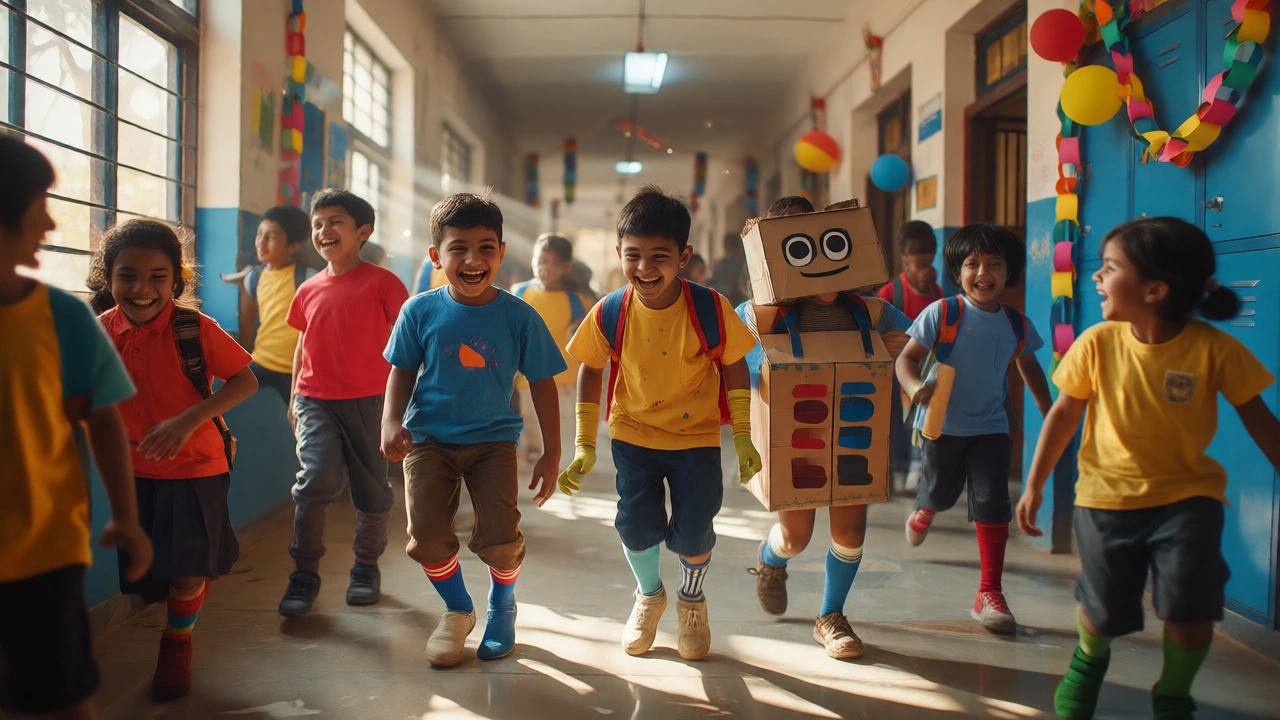
Another common issue is cost. Fancy costumes can strain family budgets. Most schools understand this and encourage DIY solutions. A cardboard box becomes a robot; a bedsheet becomes a ghost. Emphasize creativity over expense. If your school charges a fee for Wacky Day activities, ask if waivers are available for families in need. Inclusivity is key-if some kids can’t participate due to cost, the communal benefit diminishes.
Finally, check the schedule. Sometimes Wacky Days are scheduled right before exams, which can distract students. Ideally, they should occur mid-term or after major assessments to serve as a reward and reset. Communicate with teachers if the timing feels off-balance for your child’s workload.
Is Wacky Day mandatory for all students?
Generally, yes, attendance is expected like any other school day. However, participation in specific activities may vary based on individual needs or medical reasons. Check with your school's administration for specific policies regarding exemptions.
Do students get homework on Wacky Day?
Most schools suspend regular homework assignments for Wacky Day to maintain the spirit of relief and fun. However, long-term projects might still be due. It’s best to check the daily agenda sent home the night before.
How often does Wacky Day occur?
Frequency varies widely by institution. Some schools hold it once per term, others quarterly, and some annually as part of a festival week. Ask your teacher or principal for the upcoming calendar dates.
Can parents visit during Wacky Day?
This depends on school security policies. Many schools welcome parent volunteers to help with setup or judging contests. Others restrict access to staff and students only to minimize disruption. Contact the front office to inquire about visitor guidelines.
What if my child hates dressing up?
Encourage small steps. Maybe they wear one accessory instead of a full costume. Focus on the activity aspect rather than the visual element. Over time, seeing peers enjoy themselves can reduce resistance. If anxiety persists, discuss alternative participation methods with the teacher.