
Charity Impact Calculator
Calculate how much of your donation actually reaches the cause you care about. The article emphasizes that at least 75% of donations should go directly to programs. Enter your donation amount to see the breakdown.
There’s no shortage of charities asking for your money. Every email, social media post, and TV commercial seems to have a heart-wrenching story and a plea to give. But here’s the real question: which charity actually uses your donation the way you expect? Not for overhead, not for executive bonuses, but for the cause you care about?
It’s not about which one has the prettiest website or the most emotional ad. It’s about accountability. It’s about knowing that when you give $50, $100, or $500, it doesn’t vanish into a black hole. It reaches the people or animals or forests that need it most.
Let’s cut through the noise. There’s no single "best" charity for everyone. But there are clear, measurable ways to find one that’s truly trustworthy-and here’s how.
What Makes a Charity Trustworthy?
A trustworthy charity doesn’t just say it’s doing good work. It proves it. And it does so in ways you can check yourself.
First, look at how money is spent. The gold standard? At least 75% of every dollar should go directly to programs. That means only 25% or less covers fundraising and administrative costs. This isn’t a suggestion-it’s a widely accepted benchmark used by watchdog groups like Charity Navigator and GiveWell. Some top performers hit 85% or higher.
Second, transparency. If a charity won’t publish its annual report, financial statements, or impact metrics online, that’s a red flag. Trustworthy organizations don’t hide their books. They post them clearly on their website. You should be able to see exactly how much they raised, how much they spent, and what results they got.
Third, outcomes over stories. A photo of a child smiling is powerful. But if the charity can’t tell you how many children they helped last year, or how many meals they distributed, or how many acres of forest they restored, then you’re giving to emotion-not impact.
Finally, independence matters. Charities that rely on public donations and government grants are held to higher standards than those funded by a single wealthy donor. Why? Because public trust is their currency. They can’t afford to lose it.
Top Three Trustworthy Charities in 2025
Based on three years of financial audits, impact reports, and third-party evaluations, these three charities consistently rank at the top for transparency and results.
- Doctors Without Borders (Médecins Sans Frontières) - This global medical humanitarian organization spends 89% of every dollar on programs. They operate in over 70 countries, delivering emergency care in war zones, disease outbreaks, and natural disasters. Their financials are published in 12 languages. No donor lists. No celebrity endorsements. Just facts, field reports, and real-time updates.
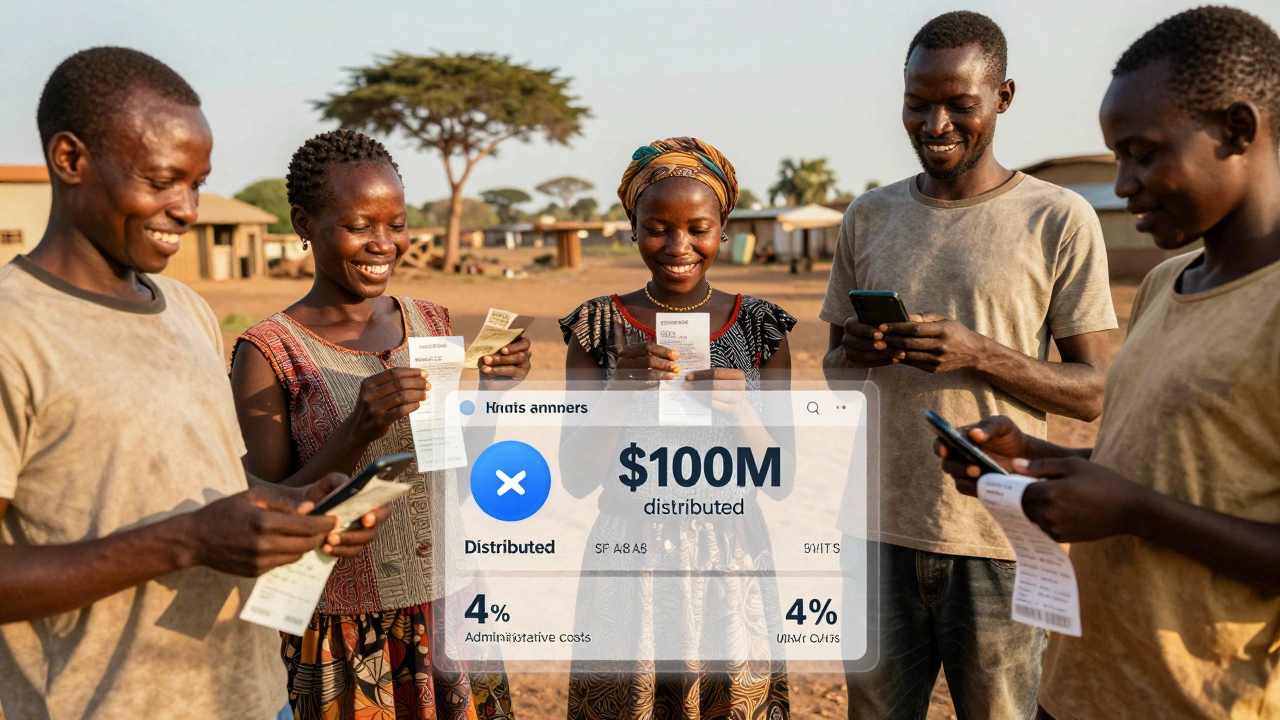
- GiveDirectly - This nonprofit gives cash directly to people living in extreme poverty-with no strings attached. Their model is simple: people know their needs best. In 2024, they transferred over $100 million to over 1.2 million families in Kenya, Uganda, and Liberia. Administrative costs? Just 4%. Their data is open-source. You can track every transfer.
- The Nature Conservancy - Focused on land and water conservation, they’ve protected over 125 million acres worldwide since 1951. Their spending breakdown: 82% to conservation programs. They work with local communities, governments, and scientists. Their impact is measurable: species recovered, waterways cleaned, carbon stored. All results are publicly mapped.
These aren’t the biggest names in terms of donations received. But they’re the most reliable in terms of results per dollar.
Red Flags That Mean Walk Away
Not all charities are created equal. Some are designed to make you feel good-not to solve problems.
Watch out for these signs:
- High-pressure tactics - "Donate now or a child will die tonight!" That’s fear, not facts. Real charities give you time to research.
- Overly emotional imagery without data - A crying dog on a billboard doesn’t tell you how many dogs were actually rescued last year.
- Unknown or vague mission statements - "Helping those in need" isn’t a mission. "Providing clean water to 10,000 rural households in Ethiopia annually" is.
- Don’t ask for your address - If a charity calls and asks for your credit card number over the phone, hang up. Legitimate organizations will never pressure you that way.
- No website or outdated site - If you can’t find a .org website with clear financials, it’s not trustworthy.
One real example: In 2023, a charity called "Children’s Hope Fund" raised over $40 million in donations. Their website showed smiling kids and a mission to "end child hunger." But their IRS Form 990 revealed they spent 87% on fundraising and administration. Only 13% went to actual programs. They shut down in early 2024 after investigations by state attorneys general.
How to Check a Charity Yourself (Step-by-Step)
You don’t need to be an expert. Here’s a simple five-step checklist anyone can use in under five minutes.
- Search the charity’s name + "financials" - Google it. If nothing comes up, be suspicious.
- Go to Charity Navigator (charitynavigator.org) - Type in the name. Look for a rating of 3 or 4 stars. Check the "Program Expenses" percentage. It should be 75% or higher.
- Check the IRS Tax Exempt Organization Search tool - Visit irs.gov/charities and search by name. Make sure they’re active and in good standing.
- Read their annual report - Look for specific numbers: "Helped 2,400 families," "Planted 15,000 trees," "Delivered 300,000 meals." Vague claims like "making a difference" are meaningless.
- Look for independent evaluations - GiveWell, Guidestar, and BBB Wise Giving Alliance rate charities based on accountability. If a charity isn’t listed, ask why.
Pro tip: Bookmark Charity Navigator. Set up a free account. Add charities you’re considering to your watchlist. You’ll get alerts if anything changes.
What About Local Charities?
Many people prefer giving locally. That’s great. But local doesn’t mean trustworthy by default.
A small food bank in your town might be doing amazing work. But if they don’t publish their budget or can’t tell you how many people they served last month, you’re flying blind.
Here’s how to vet local groups:
- Call them. Ask for their most recent annual report. If they send it within 48 hours, that’s a good sign.
- Check if they’re registered with your state’s charity regulator. Most states have a public database.
- Ask to visit. See their operations. Talk to staff. Are they overwhelmed? Are they organized? Do they seem passionate or just desperate?
- Look for partnerships. Local charities that work with schools, churches, or city governments often have better oversight.
One example: In rural Ohio, a small group called "Feed the Valley" started in a garage. They now serve 1,200 families a month. Their entire budget is under $300,000. They post every receipt online. They’ve never had a single complaint. That’s the kind of transparency that builds trust.
Volunteering vs. Donating
If you’re unsure about giving money, consider volunteering. But even here, not all opportunities are equal.
Some organizations use volunteers as free labor while spending most of their budget on marketing. Others rely on volunteers because they’re lean, efficient, and mission-driven.
Ask before you sign up:
- What’s the real need? Are you helping serve meals, or just taking photos for their website?
- Do they train volunteers? Or just hand you a shirt and send you out?
- Is there a clear structure? Are roles defined? Is there accountability?
Volunteering with a trustworthy charity means you’re adding value-not just filling a slot.
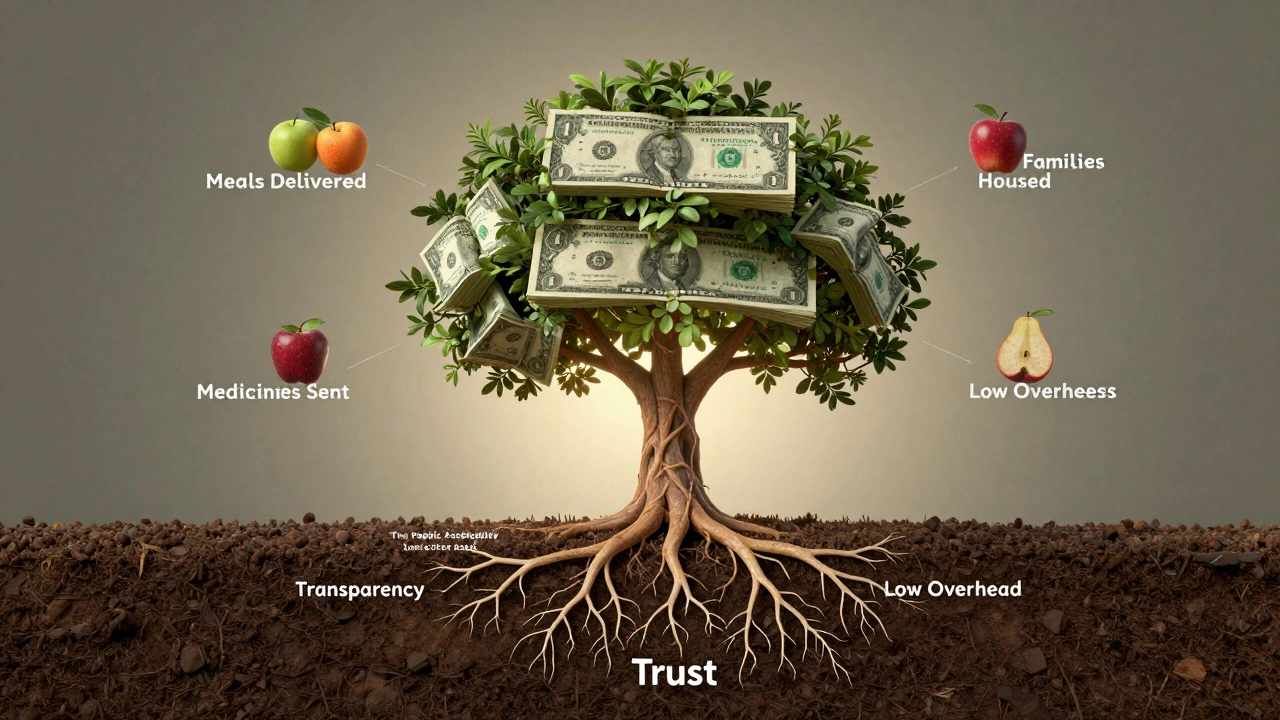
Final Thought: Trust Is Earned, Not Given
There’s no perfect charity. But there are plenty of honest ones. The ones that measure their work, publish their numbers, and let you see the results.
Don’t give because you feel guilty. Don’t give because the ad made you cry. Give because you’ve checked. Because you know. Because you’ve seen the proof.
One $50 donation to a trustworthy charity can feed a family for a month. It can buy medicine for a child. It can protect a forest. But only if you choose wisely.
How do I know if a charity is legitimate?
Check their financials on Charity Navigator or GuideStar. Look for at least 75% of donations going to programs. Make sure they’re registered with the IRS as a 501(c)(3). Avoid charities that pressure you for immediate donations or won’t share their annual reports.
Are big-name charities like Red Cross trustworthy?
It depends. The American Red Cross spends about 88% of funds on programs, which is strong. But they’ve had past controversies over executive pay and disaster response delays. Always check their latest financials. Don’t assume reputation equals reliability.
Should I donate to charities that are local or national?
Both can be trustworthy. Local charities often have lower overhead and more direct impact. National ones may have better infrastructure and reach. The key is transparency-whether they’re in your town or across the country, they should be able to show you exactly how your money is used.
Can I trust charities that spend money on advertising?
Yes-if their advertising leads to more donations that fund programs. But if more than 20% of their budget goes to fundraising and marketing, that’s a warning. A charity spending $1 to raise $5 is fine. One spending $1 to raise $1.20 is not sustainable.
What’s the difference between a charity and a nonprofit?
All charities are nonprofits, but not all nonprofits are charities. A nonprofit is any organization that doesn’t distribute profits. A charity specifically raises money to help people, animals, or the environment-and must be registered as a 501(c)(3) to receive tax-deductible donations. Always verify the IRS status before donating.
Next Steps: Start with One
You don’t need to give to ten charities. You don’t need to donate every month. Start with one. Pick a cause you care about-hunger, clean water, education, wildlife. Then use the steps above to find the most transparent, effective organization in that space.
Set up a small recurring donation. $10 a month. Track what they do. See their updates. If they’re honest, you’ll feel confident. If they’re not, you’ll know to walk away.
Trust isn’t given. It’s built. And you’re the one who holds the power to build it-or break it-with your choices.