Environmental Group Finder
Discover which environmental group best matches your values and concerns. Select your primary issue to find organizations that effectively address it.
Your Recommended Group
When people ask, "What is an example of an environmental group?" they’re not just looking for a name. They want to know who’s actually out there doing something - planting trees, stopping pollution, protecting wildlife, or pushing for real policy changes. The answer isn’t a list of buzzwords. It’s real organizations with real track records, clear goals, and measurable impact.
Greenpeace: The Global Voice for Direct Action
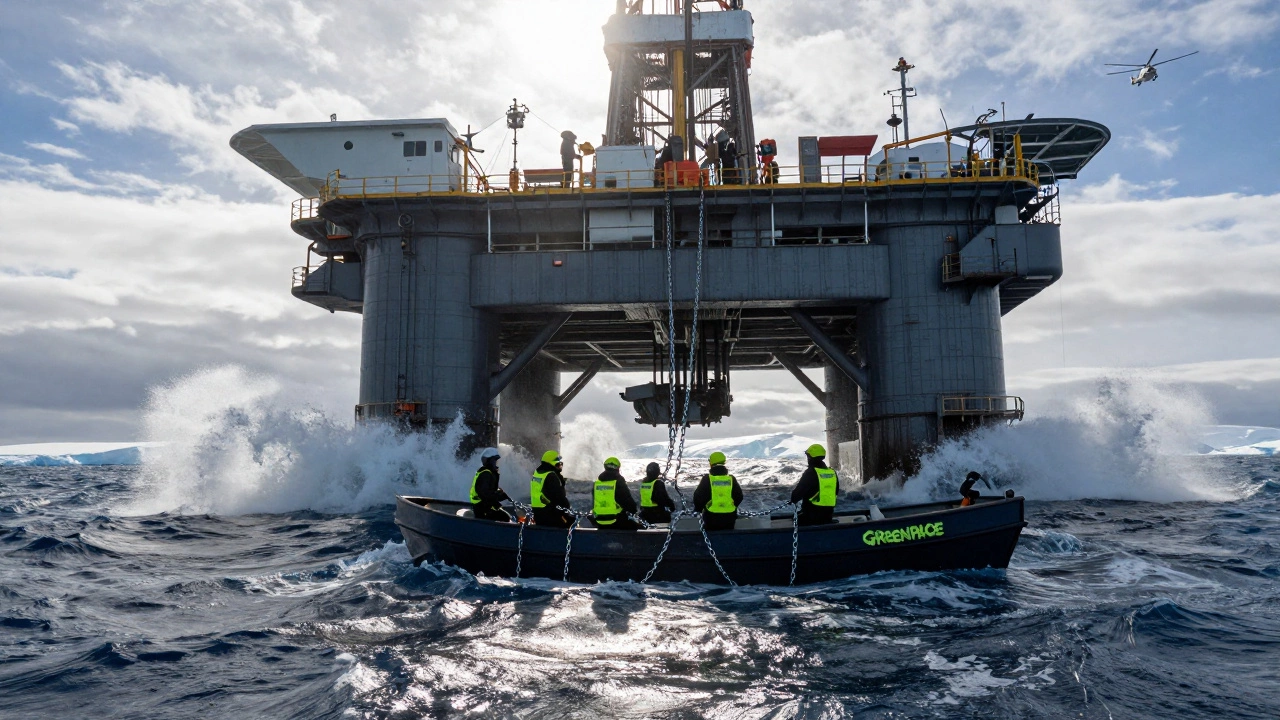
One of the most recognizable environmental groups is Greenpeace. Founded in 1971, it started with a small boat crew trying to stop U.S. nuclear tests in Alaska. Today, it operates in over 55 countries. Greenpeace doesn’t just raise awareness - it gets in the way. Its activists have blocked oil drilling rigs, chained themselves to logging equipment, and sailed into nuclear test zones. Their campaigns are bold, visual, and designed to force media attention. They’ve helped ban commercial whaling in the Southern Ocean and pushed major corporations like Nestlé and Unilever to cut plastic packaging. Greenpeace is funded entirely by individual donations, which keeps it independent from governments and corporations.
Sierra Club: America’s Oldest Grassroots Force
Founded in 1892 by John Muir, the Sierra Club is the oldest and one of the largest environmental organizations in the United States. Unlike some groups that focus only on protests, the Sierra Club works on multiple fronts: lobbying lawmakers, organizing local chapters, filing lawsuits, and leading outdoor hikes to connect people with nature. In 2016, it helped block the construction of the Dakota Access Pipeline through legal action and public pressure. It also played a key role in the 2015 Clean Power Plan under the Obama administration. With over 3.8 million members and supporters, its power comes from numbers - everyday people showing up at city council meetings, writing to Congress, and voting for leaders who prioritize clean air and water.
World Wildlife Fund (WWF): Science Meets Conservation
WWF is one of the most globally active environmental groups, with operations in more than 100 countries. It’s known for its panda logo, but its work goes far beyond symbolizing endangered species. WWF uses scientific data to identify critical habitats - like the Amazon rainforest, the Arctic, and coral reefs - and works with local communities, governments, and businesses to protect them. It helped establish over 200 protected areas worldwide. In 2020, WWF helped reduce illegal logging in the Congo Basin by working with indigenous groups to monitor forests using satellite tech. Unlike some activist groups, WWF often partners with corporations to make supply chains more sustainable, like pushing for responsibly sourced palm oil in snacks and cosmetics.

350.org: The Climate Movement’s Organizing Engine
350.org started in 2008 after scientist Bill McKibben wrote a groundbreaking article pointing out that 350 parts per million of carbon dioxide in the atmosphere is the safe upper limit. We’ve been above that number for over a decade. The group doesn’t run nature reserves or run wildlife rescues. Instead, it organizes mass protests, divestment campaigns, and digital actions to pressure banks, universities, and governments to stop funding fossil fuels. In 2012, it coordinated the largest global day of climate action ever - with rallies in 192 countries. It helped push the divestment movement, convincing over $40 trillion in assets from institutions like Harvard, the Rockefeller Foundation, and the World Council of Churches to pull money out of coal, oil, and gas companies. 350.org’s strength is its ability to turn anger into coordinated action.
National Audubon Society: Birds as Indicators of Health
If you’ve ever watched birds in your backyard, you’ve been part of the Audubon network. Founded in 1905 to protect birds from the millinery trade (which killed millions for hat feathers), the National Audubon Society now uses bird populations to measure the health of entire ecosystems. Their annual Christmas Bird Count - started in 1900 - is the longest-running citizen science project in the world. Over 100,000 volunteers count birds every winter, and that data helps scientists track climate change effects. Audubon also owns and manages over 400 wildlife sanctuaries across the U.S. They’ve successfully lobbied to protect wetlands under the Clean Water Act and helped pass the Migratory Bird Treaty Act, which prevents the killing of over 1,000 bird species.
Why These Groups Matter - And How They’re Different
Not all environmental groups work the same way. Some focus on science and policy (WWF), others on legal battles (Sierra Club), direct action (Greenpeace), mass mobilization (350.org), or community science (Audubon). You don’t need to support them all - but you should know what each does best. If you want to stop a pipeline, Greenpeace and Sierra Club are your go-tos. If you care about corporate accountability, 350.org leads that fight. If you want to help restore habitats, WWF’s field projects make the biggest difference. And if you love birds, Audubon lets you contribute from your porch.
These groups also face real challenges. Funding is always tight. Political backlash is common. Some are accused of being too moderate; others, too radical. But their work adds up. Since 1990, the global rate of deforestation has slowed by 40% - partly due to pressure from groups like WWF and Rainforest Alliance. The U.S. has cut its carbon emissions by 20% since 2005, with environmental advocacy playing a major role. These aren’t abstract wins. They’re the result of years of organizing, lobbying, protesting, and showing up.

How to Choose Which Group to Support
Not every environmental cause needs your money. Start by asking yourself: What problem keeps you up at night? Is it plastic in the ocean? Deforestation? Air pollution in your city? Endangered species? Then match that to the group’s focus.
- Want to stop fossil fuel expansion? Look at 350.org or Greenpeace.
- Prefer hands-on conservation? Try WWF or local land trusts.
- Love nature and want to help through data? Join Audubon’s bird counts.
- Want to influence laws? Sierra Club has state-level chapters that lobby directly.
You can also volunteer. Many groups need people to make phone calls, write letters, help with events, or even just share their posts. You don’t have to be an expert. You just have to care enough to act.
What Happens When These Groups Lose
When environmental groups are silenced or underfunded, the consequences show up fast. In 2023, Brazil cut funding to its environmental enforcement agencies. Amazon deforestation jumped 22% in one year. In the U.S., when the EPA’s air quality monitoring was scaled back in 2020, cancer rates in industrial zones rose. These aren’t coincidences. Environmental groups are the watchdogs. Without them, corporations and governments often act with no oversight. Their work isn’t optional - it’s necessary for survival.
What is the most effective environmental group?
There’s no single "most effective" group because effectiveness depends on the goal. Greenpeace excels at media-driven campaigns that force corporate change. Sierra Club wins legal battles and passes state laws. 350.org mobilizes millions for climate action. WWF protects habitats through science and partnerships. The best group for you is the one aligned with the issue you care about most.
Are environmental groups only active in the U.S.?
No. Environmental groups operate globally. Greenpeace has offices in 55 countries. WWF works in over 100. 350.org coordinated actions in 192 countries in 2012. Many groups focus on regions most affected by climate change, like Southeast Asia, the Amazon, and sub-Saharan Africa. Local groups often partner with international ones to amplify their impact.
Can small donations really make a difference?
Yes. Greenpeace and 350.org rely almost entirely on small individual donations. A $10 monthly gift helps fund a volunteer’s travel to a protest. $50 can pay for a satellite image that tracks illegal logging. Even $5 can help print educational materials for schools. When thousands give small amounts, it adds up to millions - and that’s how campaigns are won.
Do environmental groups ever work with corporations?
Yes, but selectively. WWF partners with companies like Unilever and IKEA to make supply chains more sustainable - for example, pushing for certified palm oil or FSC-certified wood. Greenpeace and 350.org usually avoid partnerships and instead pressure corporations through public campaigns. The key difference is whether the group has leverage. Partnerships only work when the group can hold the company accountable.
How do I know if an environmental group is trustworthy?
Check their transparency. Look for annual reports, financial statements, and clear descriptions of their campaigns. Groups like Sierra Club and WWF publish detailed impact metrics - like acres protected or policies passed. Avoid groups that don’t explain how donations are used. Also, look for third-party ratings from sites like Charity Navigator or GuideStar. Legitimate groups welcome scrutiny.
What Comes Next?
If you’re reading this, you’re already one step ahead. You’re not just asking what an environmental group is - you’re wondering how you fit into the story. The next step isn’t complicated. Pick one group that matches your values. Donate $5. Sign one petition. Share their post. Attend a local meeting. You don’t need to quit your job or move to the wilderness. You just need to show up - once. Because every big movement starts with someone who said, "I can’t just sit here."