
2024 Earth Impact Calculator
Your Daily Habits
Additional Factors
Your Environmental Impact Score
2024 Climate Context
It feels like the ground is shifting beneath our feet. If you’ve been paying attention to the news, you know that what is happening to Earth right now in 2024 isn't just a headline; it's a lived reality for billions of people. From record-breaking heatwaves scorching cities in Europe and Asia to unprecedented floods reshaping coastlines in South America, the planet is sending us urgent signals. We aren't just talking about abstract statistics anymore. We are witnessing a tangible acceleration of climate impacts that demand immediate understanding and action.
The Heat Record That Broke The Thermometer
Let’s start with the most obvious change: it is hotter. Much hotter. In 2024, we didn't just break records; we shattered them. Scientists confirmed that 2024 was on track to be the hottest year in at least 125,000 years. This wasn't a gradual climb. It was a spike. The average global temperature exceeded the critical 1.5°C threshold above pre-industrial levels for the first time in many months, not just days.
Why does this matter? Because heat is energy. When the atmosphere holds more heat, weather systems go haywire. You see this in the 'heat domes' that trapped stagnant air over North America, causing temperatures to soar past 40°C (104°F) in places that rarely see such extremes. But it’s not just about sweating through your shirt. Extreme heat stresses power grids, reduces crop yields, and makes outdoor work dangerous. For vulnerable communities, particularly those without access to cooling or healthcare, these temperature spikes are lethal.
| Indicator | 2024 Status | Impact |
|---|---|---|
| Global Temperature | Hottest on record | Increased extreme weather events |
| Ocean Surface Temp | Record highs | Coral bleaching, stronger storms |
| Arctic Sea Ice | Lowest extent | Accelerated warming feedback loop |
| CO2 Levels | ~424 ppm | Long-term atmospheric warming |
Oceans Boiling: The Silent Crisis
While we talk about land temperatures, the oceans are absorbing the majority of that excess heat. In 2024, ocean surface temperatures hit historic highs across the Atlantic, Pacific, and Indian Oceans. This phenomenon, often referred to as 'ocean fever,' has devastating consequences. Warmer water fuels stronger hurricanes and typhoons. Think of Hurricane Beryl in June 2024, which rapidly intensified into a Category 5 storm due to unusually warm waters in the Caribbean.
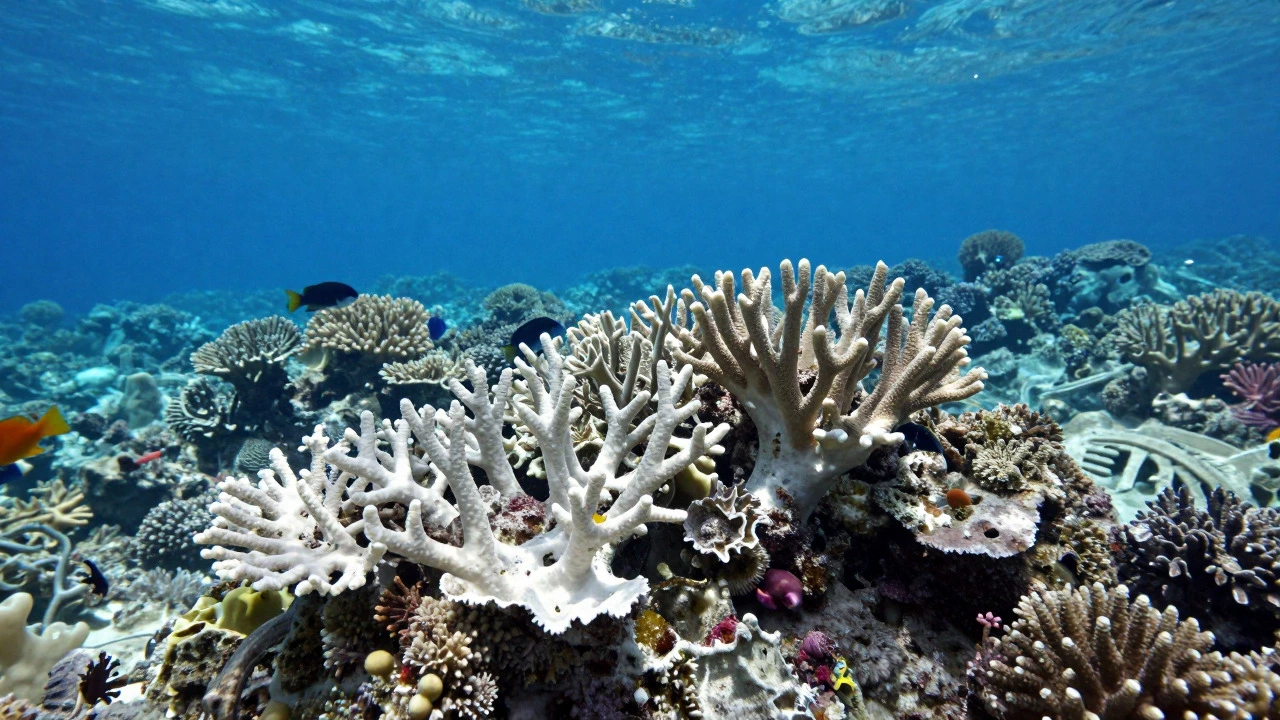
But the damage goes deeper. Coral reefs, which support 25% of marine life, experienced widespread bleaching events. When corals get too hot, they expel the algae living in their tissues, turning stark white and eventually dying. This isn't just an ecological tragedy; it threatens food security for millions of people who rely on reef fisheries. The Great Barrier Reef saw multiple mass bleaching events in quick succession, showing that recovery periods between stressors are becoming too short for ecosystems to bounce back.
Biodiversity Loss: More Than Just Pandas
When we discuss what is happening to Earth, we often focus on climate, but biodiversity loss is the other half of the planetary emergency. In 2024, reports highlighted alarming declines in insect populations, bird species, and amphibians. Insects are the backbone of our food web. Fewer bees and butterflies mean less pollination for crops like almonds, apples, and coffee. Imagine a world where your morning coffee is a luxury item because pollinator collapse made production unsustainable. That future is creeping closer.
We also saw continued deforestation in the Amazon rainforest, despite some political efforts to curb it. The Amazon acts as a massive carbon sink, pulling CO2 out of the atmosphere. As trees are cut down or burned, not only do we lose habitat for countless species, but we also release stored carbon back into the air, creating a vicious cycle. The loss of biodiversity weakens the resilience of ecosystems, making them less able to withstand climate shocks like droughts and fires.
Extreme Weather: The New Normal
If you thought natural disasters were rare, think again. 2024 demonstrated that extreme weather is no longer an exception; it’s the norm. Flash floods devastated parts of Libya and East Africa, displacing hundreds of thousands. Wildfires raged across Canada, Australia, and Greece, burning millions of hectares and choking cities with smoke. These events are not random acts of nature. They are direct results of a destabilized climate system.
Consider the flooding in Pakistan later in the year. Heavy monsoon rains, intensified by warmer air holding more moisture, led to catastrophic inundation. Entire villages were submerged, destroying homes, infrastructure, and livelihoods. For environmental groups, this underscores the urgency of adaptation strategies. It’s not enough to reduce emissions; we must also build resilient communities that can survive these inevitable shocks. Early warning systems, flood-resistant housing, and sustainable land management are critical tools in this fight.
Human Impact: Displacement and Health
The environmental crisis is fundamentally a human rights crisis. In 2024, climate-induced displacement reached new heights. People are moving away from areas that have become uninhabitable due to heat, drought, or rising seas. This creates refugees, strains resources in receiving regions, and can lead to social unrest. Imagine losing your home not because of war, but because the sea swallowed your island or the soil turned to dust. This is the reality for many small island nations and arid regions.
Health impacts are also severe. Beyond heatstroke, we’re seeing an increase in vector-borne diseases like malaria and dengue fever as mosquitoes expand their range into cooler, higher-altitude areas. Air pollution, exacerbated by wildfires, leads to respiratory issues. Mental health suffers too, with 'eco-anxiety' becoming a recognized condition, especially among young people who feel burdened by the uncertain future.
Hope Amidst The Chaos: Renewable Energy Boom
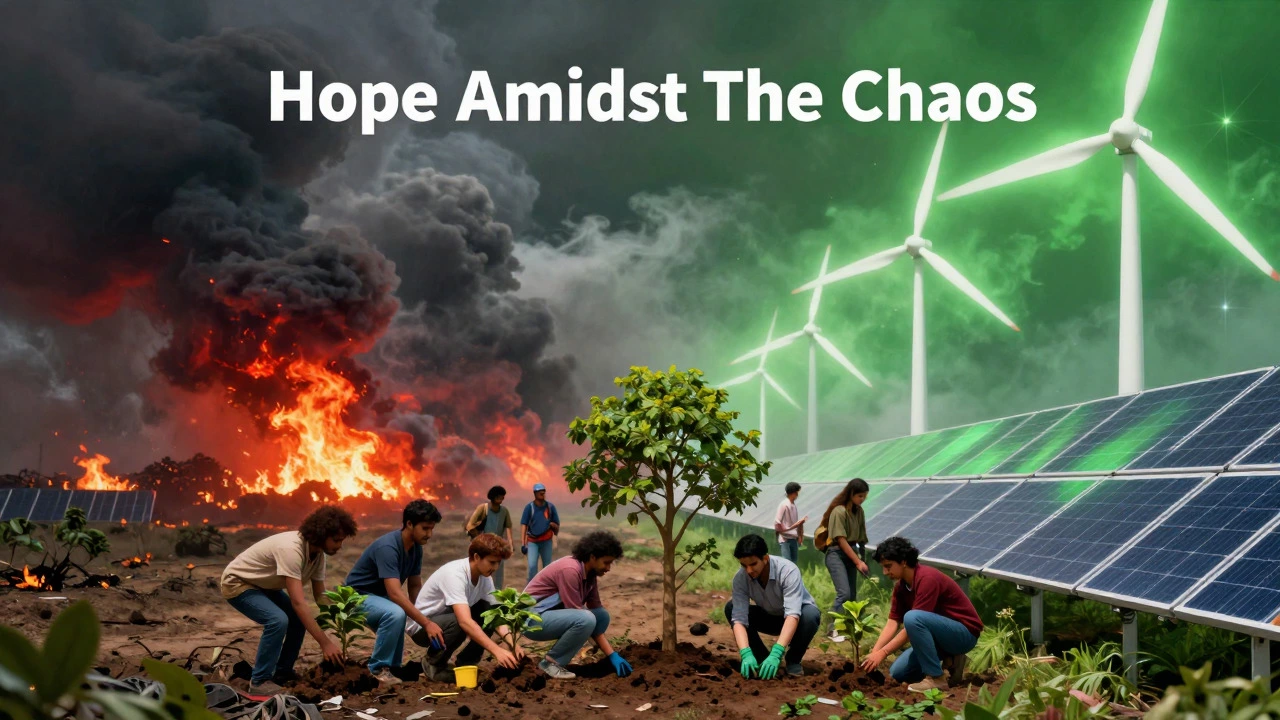
It’s easy to feel hopeless, but 2024 wasn’t all bad news. There was significant progress in renewable energy adoption. Solar and wind power installations reached record levels globally. Costs for solar panels dropped further, making them cheaper than fossil fuels in most markets. Countries like China, the US, and India led the charge, adding gigawatts of clean capacity each month. Electric vehicle sales also surged, signaling a shift in transportation.
Policy momentum grew too. The aftermath of COP28 saw increased commitments to phase out fossil fuels. While implementation lags behind promises, the political will is building. Local communities are taking action, forming cooperatives to invest in green energy. Environmental groups played a crucial role here, advocating for policies, suing governments for inaction, and mobilizing public opinion. Their work shows that collective action can drive change, even in the face of powerful opposition.
What Can You Do Right Now?
So, what is happening to Earth right now in 2024 is a mix of dire warnings and glimmers of hope. The situation is serious, but not hopeless. Here’s how you can contribute:
- Reduce Your Carbon Footprint: Switch to renewable energy if possible, eat less meat, and use public transport or bikes.
- Support Environmental Groups: Donate to or volunteer with organizations fighting for climate justice and conservation.
- Advocate Politically: Vote for leaders who prioritize climate action and contact your representatives to demand stronger policies.
- Educate Others: Share accurate information about climate science and inspire friends and family to take action.
- Adapt Locally: Plant native species in your garden, conserve water, and prepare for local climate risks.
The choices we make today will determine the world we live in tomorrow. Every fraction of a degree matters. Every ton of CO2 avoided counts. Let’s not wait for the perfect moment. Start now.
Was 2024 really the hottest year ever recorded?
Yes, multiple scientific agencies confirmed that 2024 broke previous temperature records, surpassing 2023 as the hottest year since modern record-keeping began. This was driven by high greenhouse gas concentrations and El Niño conditions.
How does ocean warming affect daily life?
Ocean warming leads to stronger storms, which can cause flooding and property damage. It also disrupts fisheries, potentially raising food prices and affecting food security for coastal communities.
What is 'eco-anxiety'?
Eco-anxiety is chronic fear of environmental doom. It’s a mental health response to the perceived threat of climate change, affecting many, especially younger generations, leading to stress and feelings of helplessness.
Can individual actions make a difference?
Absolutely. While systemic change is needed, individual actions collectively reduce demand for fossil fuels, influence market trends, and create social pressure for policy changes. Every bit helps.
Which environmental groups are leading the fight in 2024?
Groups like Greenpeace, WWF, and local grassroots organizations are active. They focus on litigation, advocacy, conservation projects, and community education to address climate and biodiversity crises.