Support Group Finder
Find Your Support Group
Answer a few questions to get personalized guidance on finding support groups that match your situation.
Next Steps
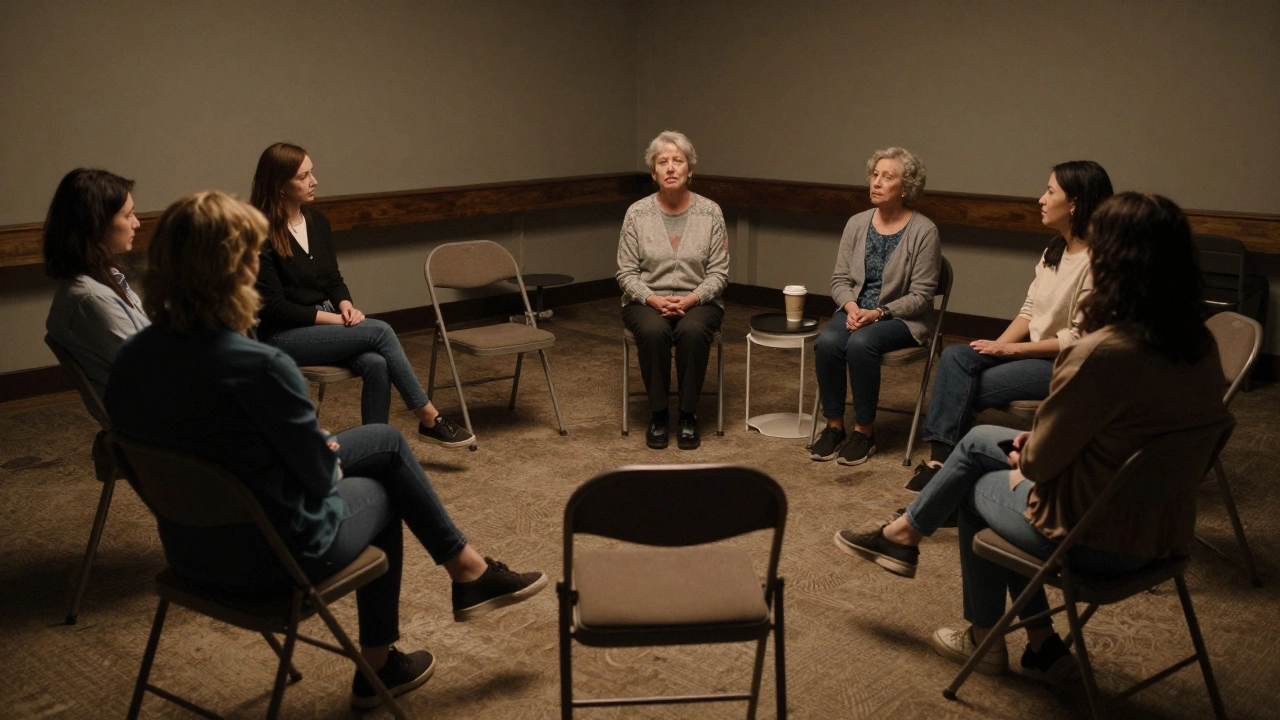
When someone says support group, you might picture a circle of chairs in a church basement, people sharing stories quietly, tears drying on cheeks. That’s one version. But support groups come in many forms-some meet online, some meet in libraries, some meet over coffee after work. The real question isn’t what they look like. It’s: what do they actually do?
Support groups aren’t therapy, but they help like therapy
A support group isn’t led by a licensed counselor. There’s no diagnosis, no treatment plan, no insurance billing. But that doesn’t mean it’s not powerful. People show up because they’re tired of feeling alone. Someone in the group has been where you are-maybe they lost a child, survived addiction, raised a child with autism, or cared for a parent with dementia. They haven’t fixed it. But they’re still here. And that matters.
Studies from the American Psychological Association show that people who regularly attend peer-led support groups report lower levels of isolation and higher coping skills than those who don’t. It’s not magic. It’s shared experience. When you hear someone say, ‘I felt the same way last year,’ it changes something inside you. You stop thinking you’re broken. You start thinking you’re human.
Here’s what a real support group looks like
Let’s say you walk into a community center on Tuesday nights. The room smells like old carpet and coffee. A few folding chairs are arranged in a circle. A woman in her fifties, wearing a faded sweater, starts by saying, ‘My name’s Linda, and I’ve been sober for 18 months.’ No applause. No pity. Just quiet attention.
Next, a man in his thirties says, ‘I lost my job last month. I’ve been drinking again.’ Someone else nods. No one rushes to fix him. Someone else says, ‘I was there two years ago. I called my sponsor at 3 a.m. and cried. That helped.’
That’s a support group. No therapist. No advice unless asked. Just listening. Just being there. No one says, ‘You should try yoga.’ No one says, ‘God will help you.’ They say, ‘I know how heavy that feels.’
What’s NOT a support group
Not every group that talks about hard things is a support group. A book club discussing grief novels? Not a support group. A Facebook page where people post sad stories and get likes? Not a support group. A nonprofit offering free counseling sessions? That’s clinical care, not peer support.
Support groups have three rules you won’t find anywhere else:
- You don’t give advice unless asked.
- You don’t fix people.
- You don’t judge what someone else is going through.
If someone says, ‘I’m thinking about quitting my meds,’ the group doesn’t panic. They don’t say, ‘Don’t do that!’ They say, ‘Tell us more.’ And then they listen. That’s it.
Common types of support groups you might not know about
Most people think of addiction or grief. But support groups exist for almost every quiet struggle:
- Parents of children with rare genetic disorders-many meet monthly in hospital conference rooms.
- People caring for partners with early-onset Alzheimer’s-some meet at local YMCAs.
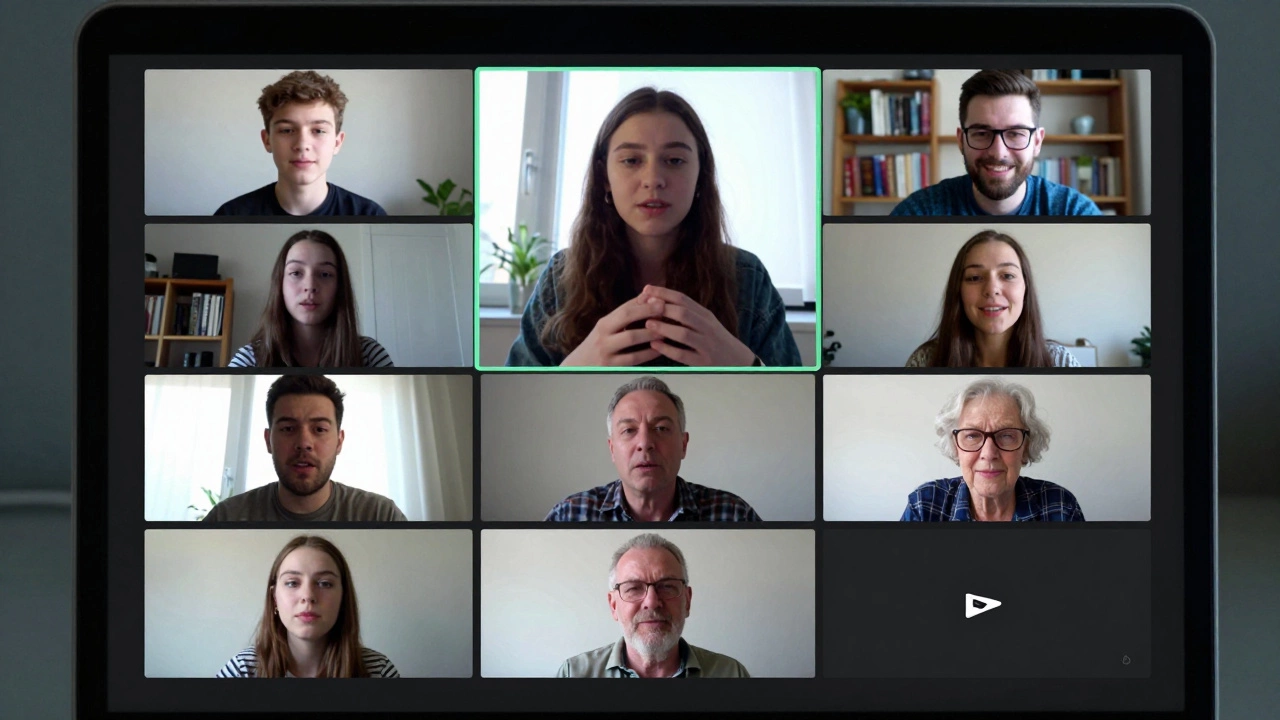
- Transgender teens in rural towns-many connect through Zoom groups organized by national nonprofits.
- Survivors of workplace bullying-some meet after hours in public libraries.
- People who’ve lost a spouse to suicide-these groups often run by local mental health nonprofits.
These aren’t flashy. You won’t see them on TV. But they’re everywhere. If you know where to look.
How to find one near you
You don’t need to search for ‘support group near me’ and get 10 ads for rehab centers. Real local support groups are often listed on:
- County health department websites
- Library bulletin boards
- Community centers or religious buildings
- Nonprofit organizations focused on mental health or chronic illness
Call your local United Way. Ask a librarian. Talk to a social worker at a hospital. They know. They’ve been connecting people for decades. You don’t need to be in crisis to join. You don’t need a referral. You just need to show up.

What happens if you go-and it doesn’t feel right?
Not every group is for everyone. Maybe the tone is too religious. Maybe the leader talks too much. Maybe you walk out after five minutes because you’re not ready. That’s okay.
Support groups aren’t a test. You don’t have to cry. You don’t have to speak. You can sit in the corner and just breathe. And if one group doesn’t click? Try another. There are hundreds. There’s one for you.
Why this matters now
In 2026, loneliness is officially labeled a public health risk by the U.S. Surgeon General. More people than ever are living alone. More people are silently struggling with anxiety, grief, or chronic illness. We’ve built a world that values productivity over presence. But support groups remind us: healing doesn’t always happen in a clinic. Sometimes, it happens in a room with bad lighting and mismatched chairs, where someone says, ‘Me too.’
That’s the most likely example of a support group-not the one you see in movies. The one that’s real. Quiet. Unpolished. And exactly what someone needs.
Is a support group the same as therapy?
No. Therapy is led by a licensed professional who diagnoses and treats mental health conditions. Support groups are peer-led and focus on shared experiences, not clinical intervention. You don’t need a diagnosis to join a support group, and you won’t get treatment plans or medication advice there.
Can I join a support group if I’m not in crisis?
Yes. Many people join before they feel like they’re in crisis. Some attend because they’re preparing for a tough time ahead-like caring for a sick relative or adjusting to a new diagnosis. Others just want to connect with people who understand. There’s no requirement to be ‘bad enough’ to join.
Are online support groups as effective as in-person ones?
For many people, yes. Research from the Journal of Medical Internet Research shows online support groups can reduce feelings of isolation just as effectively as in-person meetings, especially for people in rural areas or with mobility issues. The key is consistency and connection-not the location.
Do I have to share my story in a support group?
No. You can listen the whole time. Many people do, especially in their first few meetings. Support groups are not performance spaces. There’s no pressure to speak. Your presence alone is valuable.
What if I don’t feel comfortable in a support group?
It’s normal. Not every group fits every person. Try a different time, location, or topic. Some groups are faith-based, others are secular. Some are for women only, others are mixed. You’re allowed to leave and try again. The right group is out there-it just might take a few tries to find it.
If you’re wondering whether a local group exists for your situation, start by asking at your nearest community center or public library. They’ve been connecting people to these quiet, powerful spaces for years. You don’t need to be brave. Just show up.