Find Your Environmental Impact Style
Not sure where to start? Answer these 3 questions to find out if you are a Conservationist, an Activist, a Local Hero, or a Corporate Strategist.
Question 1
Your Match:
Recommended Organizations:
Match Score
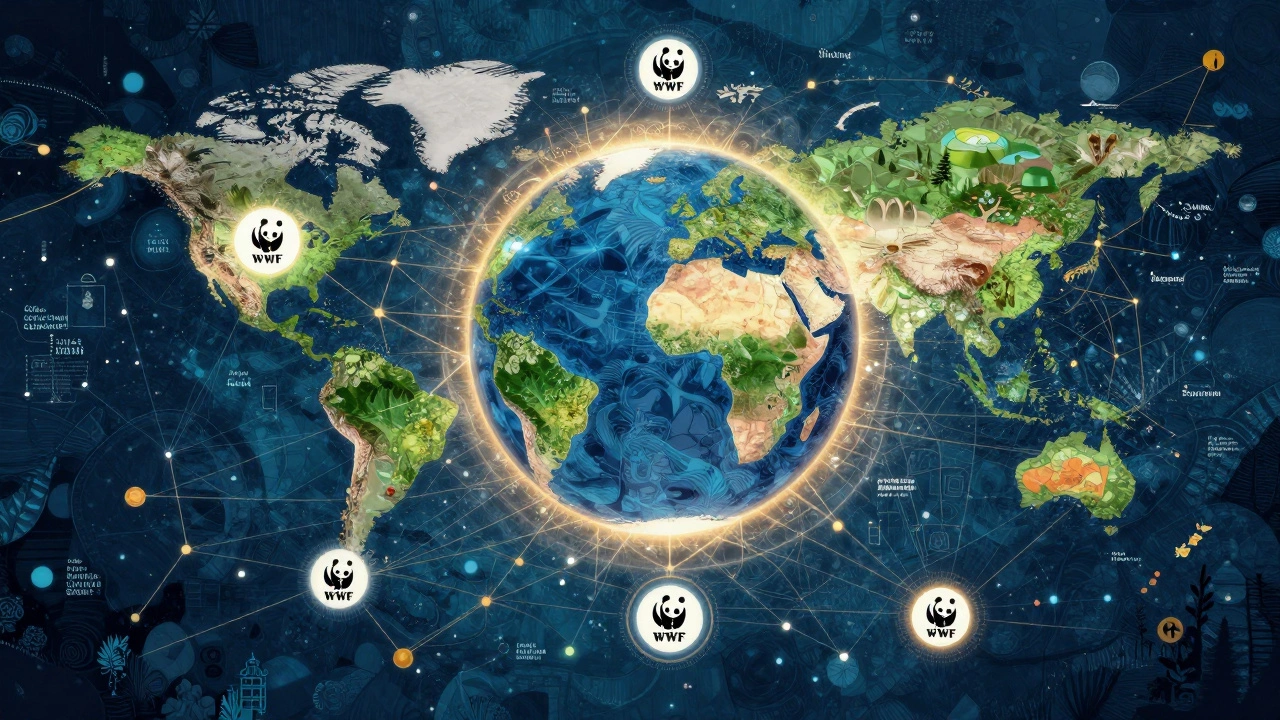
When you ask how many groups are there in environment, the short answer is: thousands. The long answer is messy, fascinating, and depends entirely on how you define a "group." Are we counting global giants with billion-dollar budgets? Local neighborhood clean-up crews? Or the grassroots collectives fighting to save a single wetland?
There isn't one central registry that tracks every environmental organization on Earth. However, major databases like GuideStar (now Candid) list over 150,000 nonprofits in the United States alone that have some environmental focus. Globally, the number likely exceeds half a million when you include informal community groups, indigenous coalitions, and corporate sustainability arms.
The landscape is vast because the problem is vast. Climate change, biodiversity loss, pollution, and resource depletion require different kinds of solutions. Consequently, the movement has fractured into specialized niches. Understanding these categories helps you figure out where your time, money, or volunteer energy will actually make a difference.
The Big Umbrella: International Non-Governmental Organizations (INGOs)
At the top of the food chain are the large international non-governmental organizations. These are the names you see on billboards and in news headlines. They operate across borders, lobby governments at the UN level, and manage massive field operations.
Greenpeace is a global campaigning organization that uses peaceful direct action to expose environmental problems and force solutions. Founded in 1971, it is known for its confrontational tactics, such as sailing ships between whalers and whales.
World Wildlife Fund (WWF) is an international organization dedicated to wilderness preservation and the reduction of human impact on the environment. Unlike Greenpeace, WWF often works directly with governments and businesses, focusing on science-based conservation strategies rather than protest.
Other heavyweights include Conservation International and The Nature Conservancy. The latter is unique because it focuses heavily on land acquisition-buying up critical habitats to protect them permanently. As of recent data, The Nature Conservancy protects over 120 million acres of land and water worldwide.
These groups are essential for setting global agendas, but they can feel distant. If you want to see immediate results in your own backyard, you need to look down the hierarchy.
Grassroots and Community-Based Organizations
This is where the real numbers explode. For every one large INGO, there are hundreds of local groups. These organizations are hyper-local. They might be focused on keeping a specific river clean, preserving a local park from development, or organizing community composting programs.
In New Zealand, for example, groups like Forest & Bird have regional branches that tackle issues specific to Aotearoa, such as controlling invasive predators like stoats and possums that threaten native birds. In the US, you have chapters of Sierra Club in almost every state, each fighting battles relevant to their region, whether it's fracking in Pennsylvania or drought management in California.
Why do these matter? Because policy changes locally first. A national law means nothing if local zoning laws allow polluting factories to build next to schools. Grassroots groups provide the "boots on the ground" intelligence and political pressure that big NGOs can't always generate.
- Hyper-local focus: They know the specific ecology and politics of their town.
- High engagement: Volunteers often have personal stakes in the outcome (e.g., protecting their view or water supply).
- Agility: They can react faster to local threats than bureaucratic giants.
Advocacy vs. Conservation: Two Different Playbooks
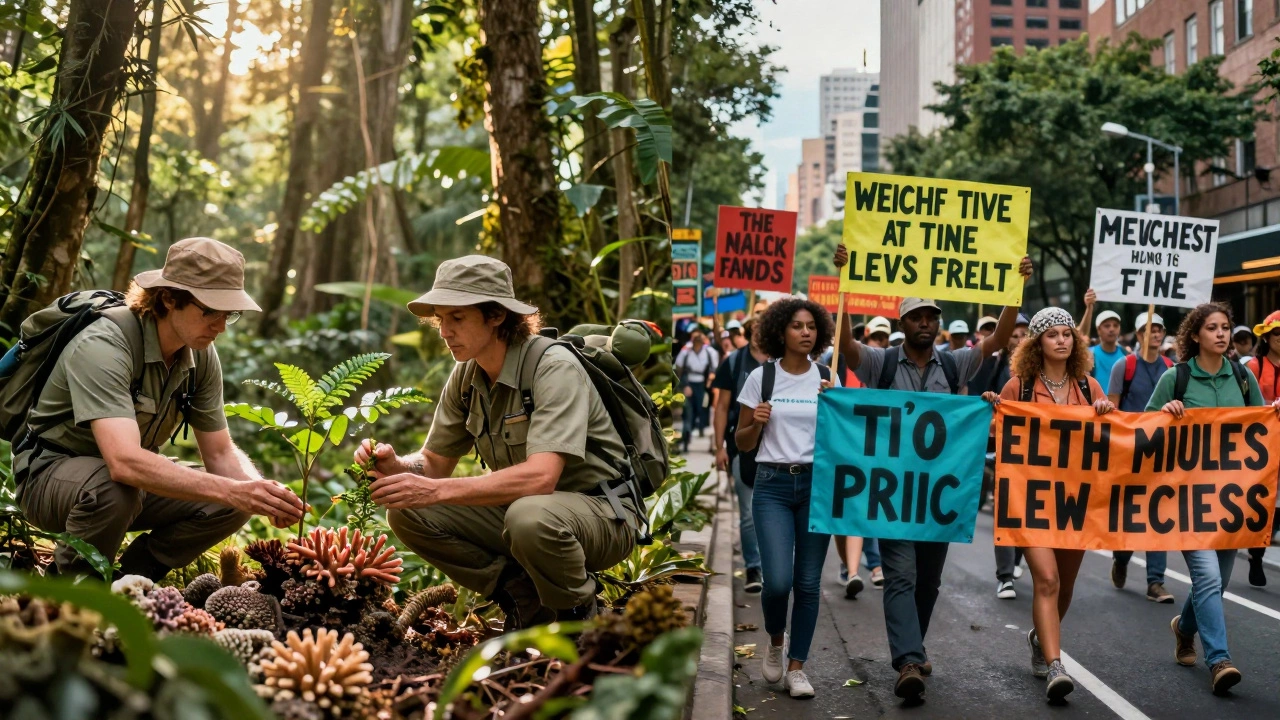
To understand the sheer volume of groups, you have to split them by method. Broadly speaking, environmental groups fall into two camps: those who conserve nature through science and land management, and those who advocate for change through policy and protest.
| Feature | Conservation Groups | Advocacy/Activist Groups |
|---|---|---|
| Primary Goal | Protect species and habitats | Change laws and public opinion |
| Tactics | Scientific research, land purchase, restoration | Protests, lobbying, litigation, media campaigns |
| Funding Sources | Government grants, corporate partnerships, individual donations | Individual small-donor contributions, foundations |
| Examples | The Nature Conservancy, WWF | Greenpeace, Extinction Rebellion |
| Relationship with Industry | Often collaborative | Often adversarial |
This distinction is crucial for donors and volunteers. If you prefer working with scientists to restore coral reefs, you'll fit better with a conservation group. If you're angry about fossil fuel subsidies and want to march in the streets, an advocacy group is your home. Both are necessary, but they speak different languages.
Indigenous-Led Environmental Stewardship
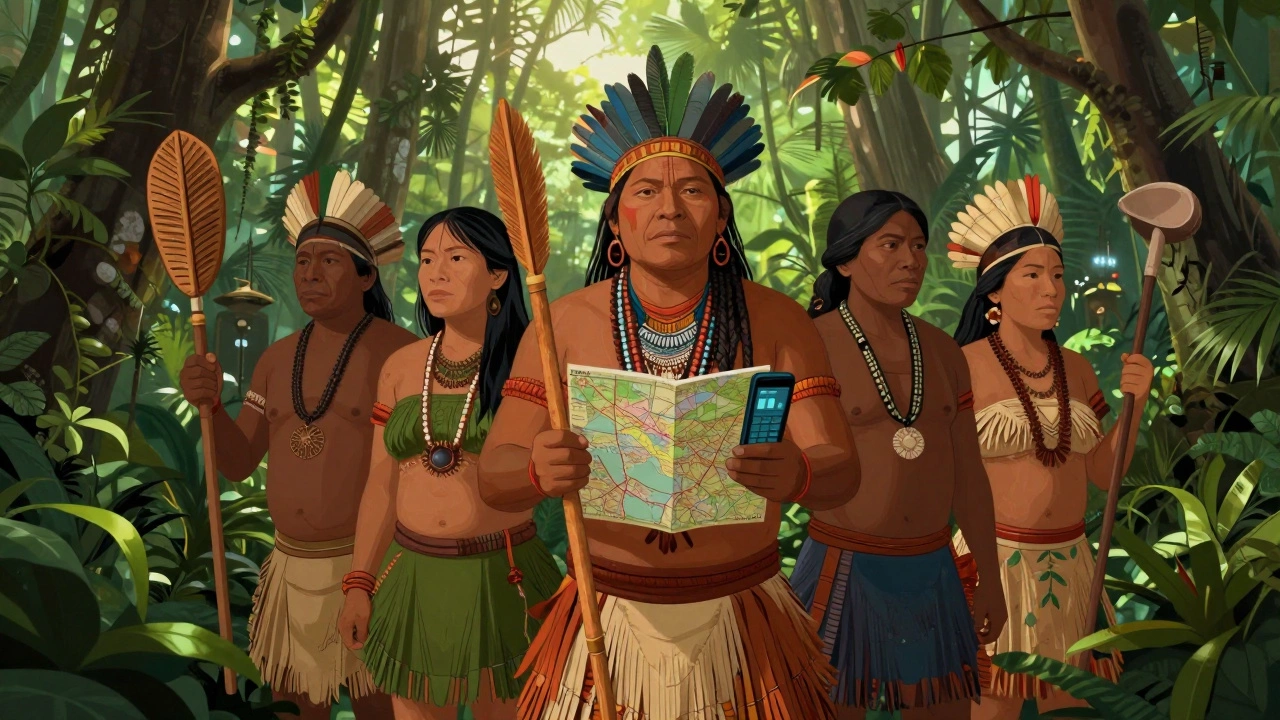
A rapidly growing and vital segment of the environmental movement consists of Indigenous-led organizations. For centuries, Indigenous peoples have managed landscapes sustainably. Today, they are on the frontlines of defending forests, oceans, and rivers from extraction industries.
Groups like Amazon Frontlines support Indigenous communities in the Amazon basin. In Canada, the Union of BC Indian Chiefs actively litigates against pipelines. These groups bring a deep, intergenerational perspective to environmentalism that Western science is only beginning to catch up with. They argue that you cannot save the planet without respecting the rights of the people who have lived on it the longest.
Supporting these groups often involves legal aid, land defense, and cultural preservation. It’s a reminder that environmentalism is not just about trees; it’s about justice.
Corporate and Business-Driven Sustainability Groups
You won't find these on a typical "green" poster, but they are numerous. These are industry associations and corporate coalitions formed to set standards for sustainable business practices. Examples include the World Business Council for Sustainable Development (WBCSD) and various roundtables on responsible sourcing (like the Roundtable on Sustainable Palm Oil).
Critics call this "greenwashing," arguing that these groups exist to soften the image of polluting industries. Proponents argue that engaging with business is the only way to scale solutions. With millions of companies operating globally, having internal sustainability teams and external industry bodies creates a framework for reducing carbon footprints at scale.
Whether you trust them or not, they represent a significant chunk of the "environmental group" ecosystem. They influence supply chains, packaging regulations, and renewable energy adoption.
Think Tanks and Research Institutes
Before action happens, analysis must occur. Think tanks produce the data that drives policy. The Intergovernmental Panel on Climate Change (IPCC) is the most famous, but it’s a government body. Independent think tanks like the World Resources Institute (WRI) or the Environmental Defense Fund (which combines law and science) provide the economic and scientific models that legislators use.
These groups don't usually hold protests. They publish white papers, advise senators, and create tools for cities to measure their carbon emissions. Without them, the other groups would lack the evidence needed to make their cases.
How to Choose the Right Group for You
So, back to the original question: How many groups are there? Too many to count, but few enough that you can find one that fits your values. Here is a quick heuristic to help you navigate the crowd:
- Identify your passion: Do you care more about animals, climate policy, or local cleanliness?
- Choose your method: Do you want to write checks, pick up trash, write letters to politicians, or sue corporations?
- Check the transparency: Use sites like Charity Navigator or GuideStar to see how much of the donation goes to programs vs. administration. Look for financials that show low overhead costs.
- Start local: Even if you donate to a global cause, joining a local chapter builds community and skills.
The environmental movement is not a monolith. It is a mosaic of tens of thousands of organizations, each playing a specific role. Whether it's a lawyer in a courtroom, a biologist in a rainforest, or a teenager striking in the street, they are all part of the same fight. The key is finding the lane that matches your energy and expertise.
Is there a complete list of all environmental groups?
No, there is no single global registry. Databases like GuideStar/Candid cover North America extensively, while other regions have local charity commissioners or nonprofit registries. However, many small grassroots groups are unregistered and therefore invisible to these databases.
What is the difference between an NGO and an INGO?
An NGO (Non-Governmental Organization) operates independently of any government. An INGO (International Non-Governmental Organization) is simply an NGO that operates in multiple countries. All INGOs are NGOs, but not all NGOs are international.
Are environmental groups effective?
Yes, but effectiveness varies by type. Conservation groups have protected millions of acres of land. Advocacy groups have helped pass landmark legislation like the Paris Agreement. However, critics argue that some large groups move too slowly or compromise too much with corporate interests.
How can I start my own environmental group?
You don't need to register immediately. Start by identifying a local issue, gathering a small team of interested neighbors, and taking action (like a cleanup day). Once you grow and handle money, you may need to register as a nonprofit or charity depending on your country's laws.
Which environmental group is the biggest?
By budget and land holdings, The Nature Conservancy is often considered the largest. By membership and brand recognition, groups like Greenpeace and WWF are among the most prominent globally.