Community Outreach Strategy Builder
Answer the following questions about your current or planned outreach initiative to receive a customized strategy assessment and actionable recommendations.
Your Outreach Health Score
Key Recommendations
You’ve probably heard the term community outreach thrown around at board meetings or in grant applications. But what does it actually mean when you strip away the jargon? It’s not just handing out flyers at a park or posting on social media. At its core, community outreach is the deliberate effort by an organization to connect with people outside its immediate circle to share resources, information, and support. Think of it as building bridges rather than just shouting into the void.
If you’re running a nonprofit, managing a school program, or leading a corporate social responsibility initiative, getting this concept right determines whether your work lands or fizzles out. This guide breaks down exactly what community outreach entails, why it matters more than ever in 2026, and how to move from vague intentions to tangible results.
The Core Definition: More Than Just Marketing
Community outreach is a strategic process where organizations engage directly with specific groups within a geographic area or demographic segment to address needs, build relationships, and foster mutual benefit. Unlike general marketing, which often targets consumers for profit, outreach focuses on service, education, and relationship-building. The goal isn’t necessarily to sell something; it’s to solve a problem or fill a gap.
Consider the difference between a billboard for a new gym and a free health screening event hosted by that same gym in a low-income neighborhood. The billboard is advertising. The screening is outreach. One asks for money; the other offers value first. This distinction is critical because true outreach requires humility. You have to listen before you speak. If you walk into a neighborhood assuming you know what they need without asking, you’re likely missing the mark.
Why Traditional Methods Are Failing
A lot of organizations still treat outreach like a checklist: send emails, hold one town hall, post on Facebook, done. But here’s the hard truth: those methods rarely create deep change. People are skeptical. They’ve been promised help by politicians, corporations, and nonprofits who disappear after the press release goes out.
Effective modern outreach relies on trust. And trust takes time. According to data from the National Council of Nonprofits, organizations that maintain consistent, two-way communication see 40% higher retention rates among beneficiaries compared to those using sporadic contact. That means showing up repeatedly, even when there’s no crisis to manage.
For example, imagine a food bank trying to reach elderly residents who don’t use smartphones. Sending them a text message won’t work. Instead, partnering with local churches or senior centers to distribute printed schedules creates a reliable channel. The entity doing the outreach adapts to the audience, not the other way around.
Key Pillars of Successful Outreach Programs
To structure your efforts, focus on four main pillars. These aren’t optional extras; they are the foundation of any sustainable program.
- Accessibility: Can people physically and digitally reach you? If your office is only open during working hours but your target audience works night shifts, you’re excluding them.
- Cultural Competence: Do you understand the norms, languages, and values of the group you’re serving? Missteps here can damage reputation quickly.
- Sustainability: Is this a one-time project or an ongoing partnership? Short-term fixes often create long-term dependency issues.
- Feedback Loops: How do you know if it’s working? Without mechanisms to collect input, you’re flying blind.
Let’s look at a real-world scenario. A local library wants to increase youth attendance. Instead of assuming teens want more books, they conduct surveys at high schools. They discover students want quiet spaces to study and Wi-Fi access for job applications. The library adjusts its layout and extends evening hours. Attendance jumps by 25% in three months. Why? Because the outreach was driven by actual user data, not internal assumptions.

Digital vs. In-Person: Finding the Right Balance
In 2026, you can’t ignore digital tools, but you also can’t rely solely on them. The best approach is hybrid. Digital channels allow for scale and speed, while in-person interactions build depth and empathy.
| Channel Type | Best For | Cost Efficiency | Trust Level |
|---|---|---|---|
| Social Media | Broad awareness, quick updates | High | Low to Medium |
| Email Newsletters | Retaining existing contacts | Medium | Medium |
| Community Events | Building personal connections | Low | High |
| Partnerships | Reaching niche demographics | Medium | Very High |
Notice the pattern? Higher trust usually correlates with higher effort and lower scalability. That’s the trade-off. If you’re launching a new mental health clinic, you might start with social media ads to generate initial interest, but you’ll need face-to-face workshops to convert those interested individuals into active patients. Don’t try to force one channel to do everything.
Common Pitfalls to Avoid
Even well-meaning organizations stumble. Here are three traps to watch out for:
- The "Savior" Complex: Approaching a community as if you have all the answers and they have none. This alienates locals who know their own challenges best.
- Lack of Follow-Through: Promising services that never materialize. If you say you’ll provide tutoring, but volunteers drop out, credibility evaporates.
- Ignoring Internal Capacity: Taking on too many projects without enough staff. Burnout leads to poor service quality, which reflects badly on the entire organization.
One major mistake I’ve seen repeatedly is confusing activity with impact. Hosting ten events sounds impressive, but if only five people attended each one and didn’t return, the outreach failed. Measure outcomes, not outputs. Did lives improve? Did barriers decrease? Those are the metrics that matter.
How to Start Your First Outreach Initiative
If you’re starting from scratch, don’t overcomplicate it. Follow these steps:
- Identify Your Target Audience: Be specific. “The homeless” is too broad. “Veterans experiencing housing instability in District 4” is actionable.
- Map Existing Assets: Who already serves this group? Churches, libraries, clinics, local businesses. Partner with them instead of duplicating efforts.
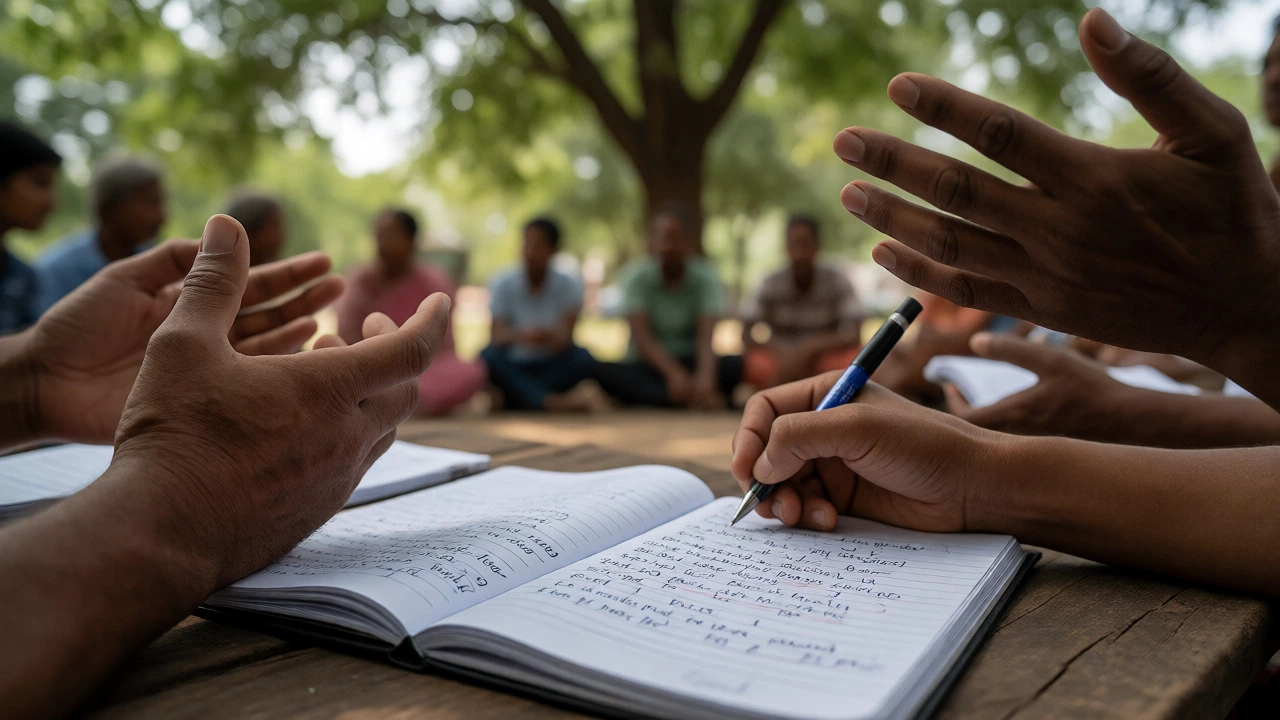
- Conduct Listening Sessions: Host informal gatherings where community members can speak freely. Take notes. Don’t defend your position; just listen.
- Pilot Small: Test one small intervention. Gather feedback. Adjust. Then scale.
- Communicate Results: Tell the community what changed because of their input. This closes the loop and encourages future participation.
For instance, a neighborhood association wanting to reduce litter didn’t start by buying bins. They walked the streets with residents, identified hotspots, and discovered that lack of trash pickup schedules was the root cause. By advocating for municipal changes together, they solved the problem sustainably.
The Role of Data in Modern Outreach
Gone are the days of guessing. Today, effective outreach uses data to refine strategies. Simple tools like QR codes on flyers can track how many people scan them. Survey platforms can gather anonymous feedback instantly. Even basic spreadsheet analysis can reveal trends-like which days of the week see the highest turnout at community centers.
However, data must be handled ethically. Always obtain consent before collecting personal information. Transparency builds trust. If you’re tracking attendance via an app, let users know how that data will be used. Will it help secure funding? Will it influence future programming? Make sure the benefits flow back to the community, not just the organization.
What is the difference between community outreach and public relations?
Public relations (PR) generally focuses on managing the public image of an organization through media coverage and messaging. Community outreach, on the other hand, involves direct interaction with specific groups to provide services or education. While PR aims to shape perception, outreach aims to create tangible engagement and support. Often, successful outreach generates positive PR, but the primary goal differs.
How do I measure the success of my outreach programs?
Success should be measured by outcomes, not just activities. Look at metrics such as participant retention rates, satisfaction scores from surveys, and tangible improvements in community conditions (e.g., reduced homelessness numbers, increased literacy rates). Qualitative feedback, such as testimonials and case studies, also provides valuable insight into the human impact of your work.
Do small nonprofits have the budget for effective outreach?
Absolutely. Effective outreach doesn’t require a large budget; it requires creativity and consistency. Leveraging volunteer networks, partnering with other local entities, and utilizing free digital tools can stretch limited funds significantly. Focus on high-impact, low-cost activities like community forums, collaborative events, and targeted social media campaigns rather than expensive advertising.
How often should we communicate with our community?
Frequency depends on the nature of your services and the preferences of your audience. Generally, regular touchpoints-such as monthly newsletters or quarterly town halls-maintain visibility without overwhelming participants. During critical periods, such as emergencies or program launches, increase frequency. Always prioritize quality and relevance over sheer volume.
What are some common mistakes in community outreach?
Common mistakes include failing to listen to community needs, assuming one-size-fits-all solutions, lacking follow-through on promises, and ignoring cultural differences. Another frequent error is measuring success by output (number of events held) rather than outcome (actual improvement in community well-being).