Interactive Environment Balance Analyzer
Natural
Ecosystems & Resources
Built
Housing & Infrastructure
Social
Community & Culture
Digital
Tech & Connectivity
Your Results
0%Overall Harmony Score
When you hear the word "environment," what comes to mind? Is it a forest, a city street, your family dinner table, or perhaps the screen glowing in front of you right now? Most people think only of nature-the trees, rivers, and wildlife. But that’s just one piece of a much bigger puzzle.
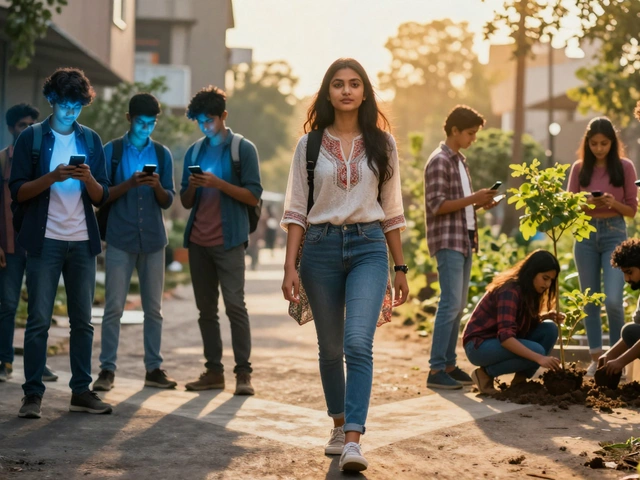
The world we live in is actually made up of four major environments: the natural, the built, the social, and the digital. Each one shapes how we breathe, work, connect, and survive. Understanding these four distinct spaces helps us see why protecting our planet isn’t just about planting trees-it’s also about designing better cities, building healthier communities, and managing our online lives wisely.
1. The Natural Environment: Our Biological Foundation
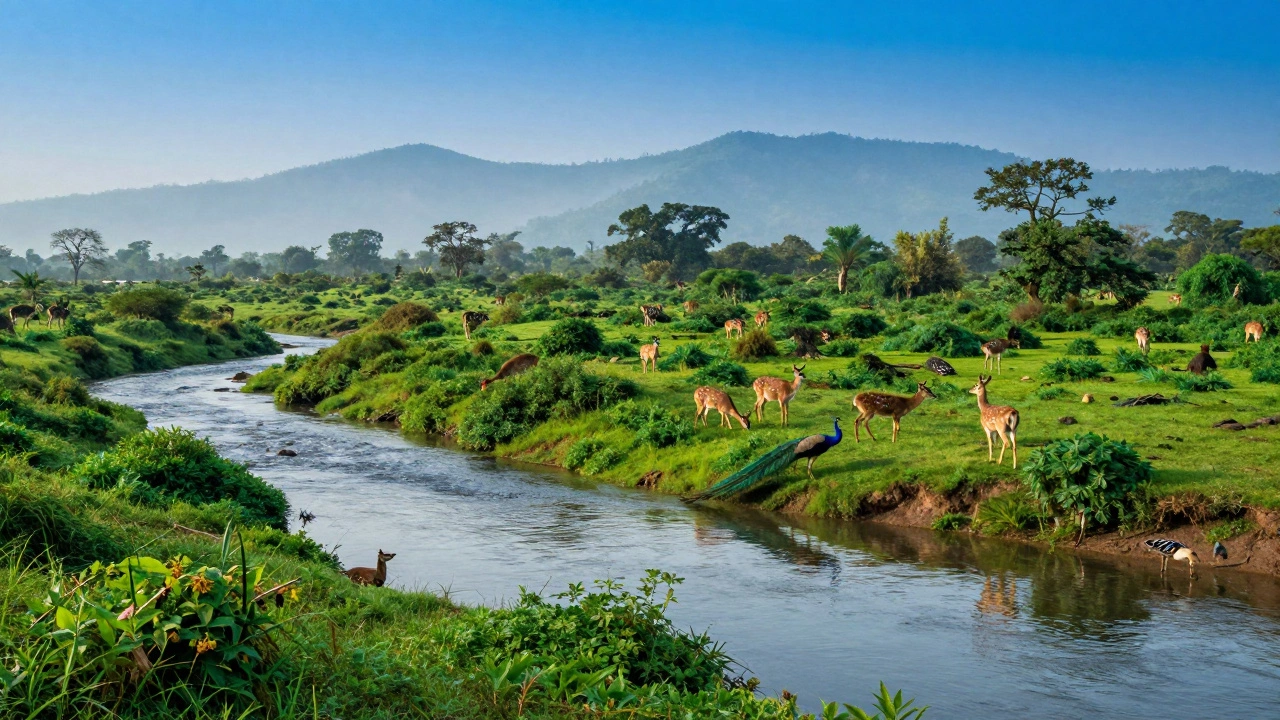
This is the original blueprint for life. The natural environment provides the air we breathe, the water we drink, and the food we eat. It operates through complex cycles-carbon, nitrogen, water-that have been running for billions of years without human intervention.
Think about it this way: if the natural environment were a house, it would be the foundation. If the foundation cracks, the whole structure suffers. We see this happening today. Climate change isn't just an abstract concept; it's the natural environment signaling distress. Rising sea levels threaten coastal cities, while extreme weather events disrupt agriculture globally.
Key components include:
- Biosphere: All living organisms and their interactions.
- Atmosphere: The layer of gases surrounding Earth that regulates temperature and protects us from solar radiation.
- Hydrosphere: All water bodies, including oceans, lakes, rivers, and groundwater.
- Lithosphere: The solid outer layer of Earth, including rocks, minerals, and soil.
For environmental groups, this is often the primary focus. Organizations like the World Wildlife Fund (WWF) or Greenpeace work directly here, advocating for conservation, sustainable resource use, and pollution reduction. But even if you're not an activist, your daily choices affect this space. How much plastic do you throw away? Do you drive or take public transit? These small actions ripple through the natural system.
2. The Built Environment: Human-Made Spaces
If the natural environment is the foundation, the built environment is the house itself. This includes every structure humans have created: skyscrapers, suburbs, highways, power grids, and even the park bench where you sit to read this article.
The built environment has a profound impact on health and behavior. Studies show that people living in areas with green spaces report lower stress levels and better mental health. Conversely, poorly designed urban areas can lead to isolation, obesity, and respiratory issues due to pollution.
Consider two neighborhoods. One has wide sidewalks, bike lanes, local shops, and tree-lined streets. The other is dominated by car-centric design, with large parking lots, fast-food chains, and no pedestrian access. Which one encourages walking, social interaction, and community bonding? The answer is clear. Urban planners and architects play a critical role here, deciding whether our cities promote well-being or hinder it.
Challenges in the built environment include:
- Urban sprawl: Unplanned expansion of cities into rural areas, leading to habitat loss and increased carbon emissions.
- Inefficient energy use: Buildings account for nearly 40% of global energy consumption.
- Lack of accessibility: Many older structures aren't designed for people with disabilities or aging populations.
Sustainable architecture and smart city initiatives are trying to fix these problems. Solar panels on roofs, rainwater harvesting systems, and mixed-use developments are becoming more common. Environmental groups increasingly collaborate with urban planners to ensure that development doesn't come at the cost of ecological health.
3. The Social Environment: Relationships and Culture
You might not think of your friends, family, coworkers, or cultural background as part of the "environment," but they are. The social environment influences everything from what you believe is true to how you treat others. It’s invisible but powerful.
Imagine growing up in a household where recycling is normal versus one where waste disposal is careless. Your habits will likely reflect those early lessons. Similarly, workplace cultures determine whether employees feel valued or exploited. Schools shape students' confidence and curiosity-or crush it.
The social environment also includes broader societal structures like laws, economic systems, and media narratives. For example, countries with strong social safety nets tend to have happier citizens because basic needs are met. In contrast, societies with high inequality often struggle with crime, poor health outcomes, and political instability.
Why does this matter for environmentalism? Because behavior change starts socially. You’re more likely to adopt eco-friendly practices if your peers do too. Community gardens, neighborhood cleanups, and local advocacy groups thrive when there’s a supportive social fabric. Environmental organizations know this-they don’t just campaign against polluters; they build coalitions among farmers, indigenous leaders, scientists, and everyday citizens.
Key elements of the social environment:
- Family dynamics: Early influencers of values and habits.
- Peer groups: Shapers of teenage and adult behavior.
- Cultural norms: Shared beliefs about what’s acceptable or desirable.
- Media influence: News outlets, social networks, and entertainment shape public opinion.
A toxic social environment-one filled with misinformation, fear-mongering, or division-can derail progress on any issue, including climate action. That’s why education and open dialogue are so crucial.

4. The Digital Environment: Our Virtual Reality
Just twenty years ago, the digital environment didn’t exist as a standalone category. Today, it’s everywhere. From smartphones to cloud servers, from social media algorithms to artificial intelligence, the digital realm affects how we interact with the other three environments.
On one hand, technology offers incredible tools for solving environmental problems. Satellite imagery tracks deforestation in real time. Apps help consumers choose sustainable products. Remote work reduces commuting emissions. On the other hand, the digital world has its own footprint. Data centers consume massive amounts of electricity. E-waste piles up in landfills across developing nations. And constant connectivity contributes to anxiety and burnout.
Here’s a surprising fact: sending one email generates approximately 4 grams of CO₂ equivalent. Multiply that by billions of emails sent daily, and you start seeing the scale. Streaming video accounts for nearly 60% of global internet traffic-and thus a significant portion of digital energy use.
The digital environment also amplifies the social environment. Misinformation spreads faster than facts. Echo chambers reinforce biases. Yet, it also connects activists worldwide, enabling movements like #FridaysForFuture to gain momentum overnight.
To navigate the digital environment responsibly, consider:
- Digital detoxes: Regular breaks from screens improve mental health.
- Eco-conscious browsing: Optimize videos, delete unused files, and support green hosting providers.
- Critical thinking: Verify sources before sharing content.
- Device longevity: Repair instead of replace to reduce e-waste.
As AI becomes more integrated into daily life, understanding the ethics and impacts of machine learning will be essential. Who controls the algorithms? What data is being collected? These questions tie back to both the social and digital environments.
How the Four Environments Interact
No environment exists in isolation. They constantly influence each other in complex ways. Let’s look at some examples:
| Interaction Type | Example | Impact |
|---|---|---|
| Natural → Built | Flooding damages infrastructure | Increased repair costs, displacement |
| Built → Natural | Deforestation for housing | Habitat loss, reduced carbon absorption |
| Social → Digital | Viral campaigns raise awareness | Policy changes, corporate accountability |
| Digital → Social | Social media echo chambers | Polarization, decreased trust |
| All Four Combined | Smart city sensors monitor air quality | Data-driven policy improvements |
Take climate change again. It begins in the natural environment (rising temperatures), affects the built environment (melting permafrost destabilizes foundations), triggers social responses (migration, protests), and gets amplified digitally (news coverage, viral videos). Solving such interconnected issues requires holistic strategies-not siloed approaches.

Practical Steps for Individuals
You don’t need to be an expert to make a difference. Here’s how you can engage positively with all four environments:
- Reduce waste: Compost food scraps, recycle properly, and avoid single-use plastics. This benefits the natural environment.
- Support local businesses: Buy from farmers’ markets and independent shops. This strengthens the social and built environments.
- Limit screen time: Set boundaries around device usage. This improves your relationship with the digital environment.
- Engage civically: Vote, attend town halls, join community boards. This reinforces democratic processes within the social environment.
- Advocate for green tech: Encourage employers to adopt renewable energy solutions. This links the digital and built environments toward sustainability.
Small actions compound over time. When millions of people make conscious choices, systemic change follows.
Conclusion: Seeing the Whole Picture
The four major environments-natural, built, social, and digital-are deeply intertwined. Ignoring one means neglecting parts of the others. True sustainability requires balancing all four. Whether you’re concerned about climate justice, urban planning, mental health, or digital privacy, recognizing these connections empowers you to act more effectively.
Next time someone asks, “What are the four major environments?” you’ll have a nuanced answer ready. More importantly, you’ll understand how your daily life fits into this larger framework. Knowledge is power-but only when applied. So pick one area to focus on this week. Start small. Build momentum. Together, we can create a future where all four environments thrive.
What are the 4 major environments?
The four major environments are the natural (ecosystems, climate), built (human-made structures), social (relationships, culture), and digital (technology, internet). Each plays a unique role in shaping human experience and planetary health.
How does the digital environment affect the natural environment?
Digital technologies consume energy through data centers and devices, contributing to greenhouse gas emissions. However, they also enable monitoring, optimization, and remote collaboration that can reduce overall environmental impact.
Why is the social environment important for environmental action?
Social norms, peer pressure, and community values drive behavioral change. People are more likely to adopt sustainable practices when surrounded by supportive social networks and shared cultural goals.
Can the built environment be improved for sustainability?
Yes, through green building standards, passive design techniques, renewable energy integration, and urban planning that prioritizes walkability and public transportation.
Are there negative aspects to the digital environment?
Yes, including excessive energy consumption, electronic waste, privacy concerns, and psychological effects like addiction and anxiety caused by constant connectivity.
How do environmental groups address all four environments?
Modern environmental organizations use multi-pronged strategies: conserving habitats (natural), promoting eco-friendly construction (built), engaging communities (social), and leveraging data analytics and advocacy platforms (digital).
Is the digital environment considered part of ecology?
While traditionally excluded, emerging fields like digital ecology study the interplay between technology and natural systems, recognizing that virtual activities have tangible ecological consequences.
What skills help individuals navigate multiple environments?
Critical thinking, adaptability, digital literacy, emotional intelligence, and systems thinking enable people to understand and positively influence all four environments simultaneously.